
Joint pain and back discomfort can make everyday activities such as walking, climbing stairs, standing for long periods, or getting out of bed more difficult. If you carry excess body weight, you may wonder whether it is contributing to your symptoms and whether losing weight would help.
Body weight is only one factor in musculoskeletal health. Joint pain can also result from injuries, arthritis, muscle weakness, inflammatory conditions, and problems involving nerves or spinal discs. Having obesity does not mean that pain is inevitable, and pain should not be dismissed simply because of a person’s weight.
Understanding how obesity affects your joints and spine can help you identify possible causes of discomfort, choose safer ways to stay active, and know when to seek medical advice. The goal is to support mobility and health without blame, extreme dieting, or unnecessary restrictions.
How Does Obesity Affect Your Joints?
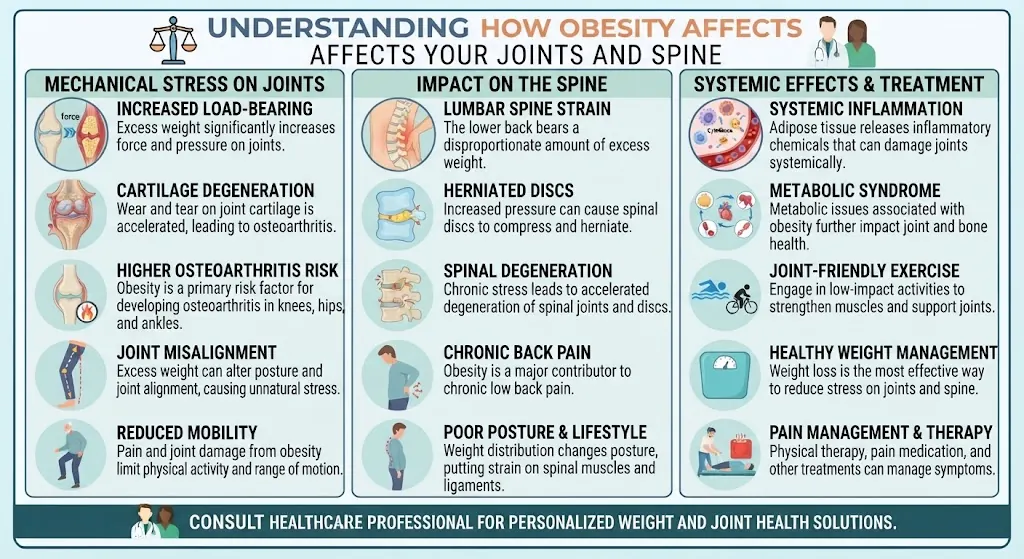
Excess body weight can increase the mechanical load on weight-bearing joints, particularly the knees, hips, and feet. Over time, greater loading may contribute to pain and increase the risk of developing osteoarthritis. Obesity is also associated with metabolic changes that may influence inflammation and joint health.
The relationship is not simply about pressure. Muscles help stabilize joints, and reduced physical activity can weaken those muscles, making movement more challenging. Pain may then discourage activity, creating a cycle of discomfort and reduced mobility.
| Body area | How excess weight may contribute | Possible symptoms |
|---|---|---|
| Knees | Increased loading during standing, walking, and stair climbing | Pain, stiffness, and difficulty bending |
| Hips | Greater load during weight-bearing movement | Aching, stiffness, or discomfort when walking |
| Feet and ankles | Increased forces during standing and movement | Foot soreness, heel pain, or ankle discomfort |
| Lower back | Changes in mechanical loading and movement demands | Back aching, muscle fatigue, or reduced tolerance for standing |
These are possible associations, not proof that body weight is the cause of an individual’s symptoms. For example, persistent knee pain and its common causes may need assessment for arthritis, tendon problems, or an injury.
Can Obesity Cause Back Pain or Spine Problems?
Obesity may contribute to lower back pain by increasing mechanical demands on the spine and surrounding muscles. It can also occur alongside factors such as low physical activity, poor sleep, and metabolic conditions that affect overall health.
However, back pain has many possible causes. Muscle strain, disc problems, arthritis, and nerve irritation can all produce symptoms, regardless of body size. Obesity does not automatically mean someone has spinal damage or a herniated disc.
| Symptom pattern | Possible explanation | What to consider |
|---|---|---|
| Aching after standing or walking | Muscular fatigue or mechanical loading | Adjust activity and build strength gradually |
| Pain after lifting or twisting | Muscle strain or another mechanical problem | Avoid movements that sharply aggravate symptoms |
| Pain traveling into the buttock or leg | Possible nerve irritation or another spinal condition | Seek assessment if persistent or worsening |
| Back pain with progressive weakness or numbness | Possible nerve involvement | Obtain prompt medical evaluation |
For a broader overview, see common causes and risk factors for back pain. If pain travels down the leg, sciatica symptoms and treatment options may also help explain the possible patterns, although only a clinician can evaluate the cause.
Does Obesity Increase Inflammation?
Obesity can be associated with chronic, low-grade inflammation because fat tissue is biologically active and releases signaling substances that influence the body. These metabolic effects may contribute to the development or progression of some musculoskeletal conditions.
Inflammation is only one part of the picture. Mechanical loading, previous injuries, genetics, age, and other health conditions can also affect joints. Not every person with obesity has increased joint inflammation, and not every painful joint is inflamed.
Learn more about how inflammation contributes to joint pain and the relationship between metabolic health and musculoskeletal pain.
Can Losing Weight Improve Joint and Back Pain?
For some people, gradual weight loss can reduce stress on weight-bearing joints and improve mobility. It may also support blood sugar regulation, cardiovascular health, sleep, and the ability to participate in physical activity. The amount of symptom improvement varies, and weight loss does not guarantee that pain will disappear.
A sustainable approach is generally more useful than a strict diet or intense exercise plan that is difficult to maintain.
1. Start with joint-friendly movement
Choose activities that fit your current ability, such as short walks, swimming, water exercise, or stationary cycling. If walking causes substantial pain, begin with a lower-impact option and increase duration gradually.
Explore low-impact exercises for people with joint pain. Stop and seek advice if an activity causes sharp pain, substantial swelling, or worsening symptoms that do not settle.
2. Build muscle strength gradually
Strengthening the muscles around the hips, knees, abdomen, and back can help support movement and daily function. A physical therapist can adapt exercises to your pain, mobility, and other health conditions.
If back discomfort is your main concern, practical daily habits and home strategies for back pain may help complement an individualized activity plan.
3. Focus on balanced nutrition
Regular meals that include vegetables, fruit, whole grains, protein sources, and unsaturated fats can support overall health and weight management. Avoid crash diets, which may make it harder to maintain muscle and obtain adequate nutrients.
Dietary changes may support general pain management, but no single food or supplement reliably treats every cause of joint pain. See how dietary changes may help manage pain.
4. Make changes that are realistic to maintain
Small adjustments—such as breaking up long periods of sitting, improving sleep routines, and choosing enjoyable movement—can be easier to sustain than a demanding short-term plan. These habits support health even when the number on the scale changes slowly.
Read about everyday habits that support joint health.
When Should You Seek Medical Care?
Do not assume that joint or back pain is caused by weight alone. Arrange a medical appointment if pain persists, repeatedly returns, disrupts sleep, limits normal activities, or is accompanied by unexplained swelling or reduced movement.
Seek urgent care for a suddenly hot, red, swollen joint, particularly with fever. Emergency assessment is needed for back pain accompanied by new loss of bladder or bowel control, numbness around the groin or saddle area, or rapidly worsening leg weakness. Severe pain after a significant injury also requires prompt evaluation.
A clinician may assess your movement, strength, medical history, medications, and other symptoms. Imaging or laboratory tests may be useful when the examination suggests a particular condition, but they are not necessary for every episode of joint or back pain.
Frequently Asked Questions
1. Which joints are most affected by obesity?
The knees, hips, and feet often experience substantial loading during weight-bearing activities. Other joints can also hurt, but symptoms may have causes unrelated to body weight.
2. Can obesity cause arthritis?
Obesity is associated with a higher risk of osteoarthritis, especially in the knees. However, arthritis has multiple contributing factors, and body weight alone cannot determine whether someone has the condition.
3. Will losing weight stop my knee pain?
Weight loss may reduce joint loading and improve symptoms for some people, but it is not a guaranteed cure. Persistent pain may require evaluation and targeted treatment.
4. Can obesity cause a herniated disc?
Obesity may be associated with back pain, but it does not prove that a disc is herniated. A clinician evaluates symptoms and examination findings to determine whether a disc or nerve problem is likely.
5. Is walking safe if my knees hurt?
Gentle walking may be appropriate when symptoms are mild and manageable. Start with a comfortable duration, increase gradually, and consider cycling or water exercise if walking worsens pain.
6. Does obesity cause inflammation in the joints?
Obesity can be associated with low-grade systemic inflammation, which may influence some joint conditions. Mechanical loading and other medical factors also matter.
7. Can losing weight help lower back pain?
It may help some people by reducing mechanical demands and improving general health and activity tolerance. Back pain has many causes, so treatment should match the symptoms rather than focus on weight alone.
8. What exercises are best for painful joints?
Low-impact aerobic exercise and appropriately adapted strength training are often useful starting points. The best choices depend on the affected joint, current fitness, and any underlying condition.
9. Should I avoid exercise if I have obesity and joint pain?
Not necessarily. Prolonged inactivity can reduce strength and mobility, but exercises should be adjusted to avoid repeatedly aggravating symptoms. A clinician or physical therapist can help identify suitable options.
10. When is joint pain a warning sign?
Persistent pain, recurring swelling, or worsening mobility warrants medical assessment. A hot, swollen joint with fever or sudden neurological symptoms alongside back pain may require urgent or emergency care.
Conclusion
Obesity can affect joints and the spine through increased mechanical loading and metabolic factors, but it is not the only explanation for pain. Gradual movement, muscle strengthening, balanced nutrition, and individualized medical guidance can support mobility and overall health. If symptoms persist or warning signs develop, seek appropriate care rather than assuming weight is the sole cause.
Disclaimer: This article is provided for educational and informational purposes only.
This article is for education purpose only and is not a diagnosis or a substitute for medical advice.