
Can a Bankart Lesion Heal Without Surgery? Treatment, Recovery & When Surgery Is Needed
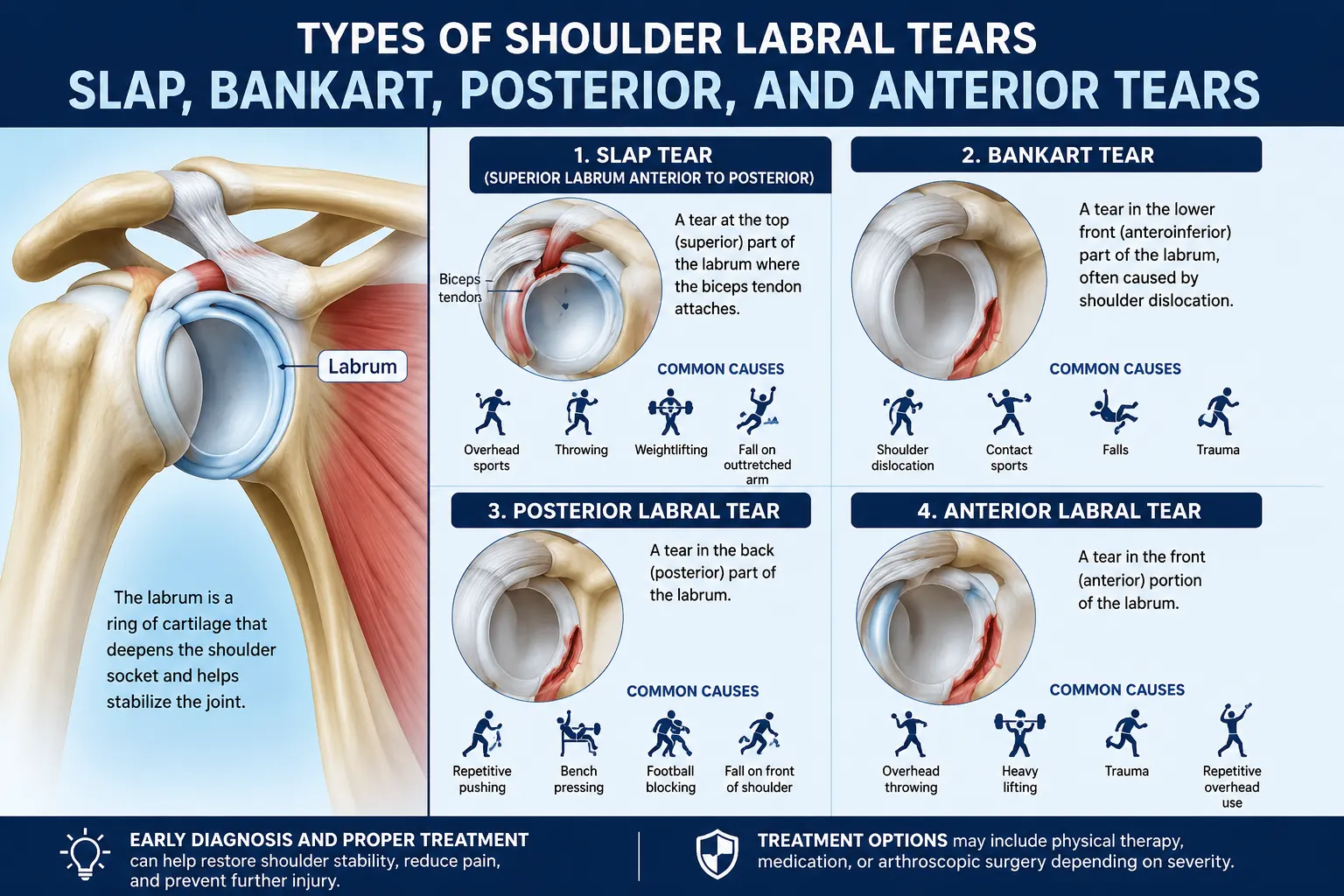
A Bankart lesion can be worrying because it is often discovered after a shoulder dislocation, when the joint already feels painful, loose, or unreliable. Everyday movements such as reaching overhead, putting on a jacket, lifting a bag, or returning to sport may suddenly feel less predictable. If an MRI report mentions a Bankart lesion, it is natural to wonder whether the torn tissue can settle down without an operation.
The answer is not the same for everyone. Some people with a Bankart lesion improve with activity changes and structured physical therapy, particularly when the shoulder is stable and there is no important bone loss. Others have repeated slipping or dislocations, or risk factors that make another dislocation more likely. Choosing treatment based only on pain level can be misleading because shoulder stability matters as much as discomfort.
A Bankart lesion is an injury to the front-lower part of the shoulder labrum, the rim of cartilage that helps deepen the socket and support the ball of the upper arm. It commonly occurs when the shoulder dislocates forward. Understanding what can improve without surgery, what conservative care can and cannot do, and which signs need an orthopedic assessment can help you discuss a safe plan.
Can a Bankart Lesion Heal Without Surgery?
Sometimes symptoms and shoulder function improve without surgery, but the torn labrum does not always reattach to the socket on its own. A non-surgical plan may be reasonable when the shoulder remains stable, the injury is limited, there is no substantial associated bone injury, and the person’s activity demands and recurrence risk are suitable for rehabilitation.
It is important to separate symptom improvement from structural healing. Pain may settle and the surrounding muscles may provide better dynamic support even if the labrum remains detached or does not heal in its original position. A clinician considers the injury mechanism, age, activity level, history of previous dislocations, examination findings, and imaging before recommending treatment.
What Is a Bankart Lesion, and Why Does It Happen?
The labrum is a ring of firm cartilage around the shoulder socket. A Bankart lesion involves the anteroinferior, or front-lower, portion of this ring. It most often follows an anterior shoulder dislocation, when the ball of the upper arm moves out of the socket toward the front. The labrum and nearby stabilizing structures may be pulled away from the socket during that event.
A Bankart lesion is one specific type of shoulder labral injury. It is different from a SLAP tear, which affects the upper labrum near the attachment of the biceps tendon. Our guide to SLAP tear vs. Bankart tear differences explains how their locations and typical problems differ.
- Traumatic dislocation: A fall, collision, or sports injury can force the shoulder out of its socket and injure the front-lower labrum.
- Repeated instability: Further episodes of the shoulder slipping out or partially out may stretch or damage stabilizing tissue.
- Associated bone injury: Some dislocations also damage the rim of the socket or create an indentation in the upper-arm bone, which can affect stability and treatment decisions.
When Is Non-Surgical Treatment More Likely to Work?
Conservative treatment may be considered when the shoulder has become stable after the initial injury and there are no major structural features that make recurrence especially concerning. It may also be considered for people whose daily and recreational activities do not involve frequent high-risk contact or extreme shoulder positions.
Factors that may support a trial of non-surgical care include:
- No repeated dislocations: A single event followed by stable function may be managed differently from recurring episodes.
- Limited bone damage: Significant bone loss can change the stability of the joint and may make surgery more appropriate.
- Improving control and strength: The shoulder can be progressively strengthened without repeated slipping or apprehension.
- Lower-risk activity demands: The person’s work, sport, and daily activities can be modified while rehabilitation progresses.
These are discussion points, not a self-assessment checklist. A shoulder can feel better while still being vulnerable to another dislocation. An orthopedic clinician should interpret imaging and examination findings together.
When Might Surgery Be Recommended?
Surgery may be discussed when the shoulder repeatedly dislocates or slips, when instability prevents normal activities, or when imaging shows structural damage that makes another dislocation more likely. Younger people who participate in collision or overhead sports may have a different recurrence risk from someone with lower physical demands. Significant glenoid bone loss or a relevant humeral-head defect can also affect the procedure considered.
One commonly used operation is arthroscopic Bankart repair, in which the detached labrum and capsule are reattached to the socket using anchors. The exact approach depends on the pattern of injury, bone loss, previous treatment, and the surgeon’s assessment. Surgery is not automatically required for every Bankart lesion, and rehabilitation is still an important part of recovery after an operation.
If you have experienced a shoulder dislocation, read our overview of shoulder dislocation symptoms, treatment, and recovery for more context about the initial injury and follow-up care.
What Does Non-Surgical Bankart Lesion Treatment Involve?
A non-surgical plan usually aims to protect the shoulder early, restore comfortable movement, and gradually build the strength and coordination needed for daily activities. The schedule should be individualized. Pushing into positions that create a slipping sensation or strong apprehension can set back progress.
- Short-term protection: A clinician may recommend a sling for a limited period after the dislocation. Prolonged immobilization without guidance can contribute to stiffness.
- Activity modification: Temporarily avoid contact sports, heavy overhead lifting, and positions that reproduce instability.
- Range-of-motion work: Gentle, staged movement helps restore mobility while respecting healing tissues and stability precautions.
- Strengthening: Physical therapy commonly progresses toward rotator cuff and shoulder-blade muscle control to improve dynamic support.
- Gradual return to activity: Progress is based on pain, movement, strength, confidence, and absence of instability—not simply the number of weeks since injury.
Do not begin a generic shoulder workout immediately after a dislocation. Some movements place the arm in positions that can provoke instability. A physical therapist or treating clinician should tailor exercises to the injury and stage of recovery. Our article on shoulder instability provides further background on the feeling that the joint may slip or give way.
How Long Does Recovery Take Without Surgery?
Recovery varies with the severity of the initial dislocation, associated injuries, age, activity demands, and whether the shoulder remains stable during rehabilitation. Early pain and movement may improve over several weeks, but restoring strength, coordination, and confidence can take longer. Returning to contact or overhead sport generally requires a more demanding assessment than returning to light daily tasks.
There is no universal timeline that makes a Bankart lesion safe. A person should not return to high-risk activity simply because pain has decreased. The treating team may assess range of motion, strength, control, sport-specific movement, and any further episodes of slipping before clearing a return.
Can a Bankart Lesion Get Worse If You Ignore It?
Continuing activities that repeatedly provoke instability may expose the shoulder to further dislocations and additional damage. Recurrent episodes can be associated with more injury to the labrum, joint capsule, or bone. This does not mean every untreated Bankart lesion will worsen, but repeated slipping or dislocation should not be dismissed as ordinary soreness.
Arrange an orthopedic assessment if the shoulder repeatedly feels as though it will come out, if it has dislocated more than once, or if you cannot regain function. Seek urgent medical care for a shoulder that appears visibly out of place, severe pain after a new injury, new numbness or weakness in the arm or hand, or a hand that becomes pale, cold, or unusually discolored.
How Is a Bankart Lesion Diagnosed?
Assessment usually begins with the history of the injury and a physical examination. The clinician may ask whether the shoulder fully dislocated, whether it reduced on its own or needed medical treatment, and whether there have been previous episodes. Examination may include carefully selected movement and stability tests; these should not be forced at home.
X-rays help assess bone position and some associated fractures. MRI can show labral and soft-tissue injuries, while CT may be used when the amount of socket bone loss needs closer measurement. An MRI finding should be interpreted alongside symptoms and examination results. For more about imaging choices, see X-ray vs. MRI for shoulder pain and our explanation of an MRI arthrogram for a shoulder labral tear.
Frequently Asked Questions
1. Can a Bankart lesion heal on its own?
Symptoms and function may improve without surgery, but the torn labrum does not always reattach in its original position. Stability and the risk of another dislocation are key factors.
2. Can you live with a Bankart lesion without surgery?
Some people can manage well with rehabilitation and activity changes, especially if the shoulder remains stable. Repeated dislocations or significant bone damage may make surgery more appropriate.
3. Does every Bankart lesion require surgery?
No. Treatment depends on instability episodes, imaging, age, activity demands, and associated injuries. A clinician should assess these factors before recommending an operation.
4. What happens if a Bankart lesion is left untreated?
Some people improve, while others continue to experience instability. Repeated dislocations can cause additional soft-tissue or bone damage, so recurring episodes need assessment.
5. Can physical therapy fix a Bankart lesion?
Physical therapy can improve strength, coordination, and shoulder control, but it cannot guarantee that a detached labrum will reattach. It is one part of a treatment plan chosen for the individual’s injury.
6. How long does a Bankart lesion take to heal?
There is no single healing timeline. Pain and movement may improve over weeks, while strength and safe return to sport can take longer and require clinical clearance.
7. Can a Bankart lesion cause shoulder instability?
Yes. Because it affects a structure that helps deepen and stabilize the socket, a Bankart lesion can contribute to a feeling that the shoulder slips or may dislocate again.
8. Is a Bankart lesion the same as a SLAP tear?
No. A Bankart lesion affects the front-lower labrum and is commonly linked with anterior dislocation. A SLAP tear affects the upper labrum near the biceps tendon attachment.
9. Can I exercise with a Bankart lesion?
Appropriate rehabilitation is often part of care, but exercises and ranges of motion must match the injury stage and stability. Avoid self-prescribed movements that cause slipping or apprehension.
10. When should I see a doctor for a Bankart lesion?
Seek assessment after a shoulder dislocation, with repeated slipping, persistent weakness, or difficulty returning to normal activity. A visibly dislocated shoulder or new circulation or nerve symptoms needs urgent care.
Conclusion
A Bankart lesion does not always mean surgery is inevitable. Some people regain useful, stable shoulder function with a carefully guided non-surgical plan, although symptom improvement does not necessarily mean the labrum has structurally reattached. Recurrent dislocations, significant bone loss, and high-demand activities can change the balance toward surgery. The safest next step is an individualized assessment that considers both the labral injury and the stability of the entire shoulder.
Disclaimer: This article is intended for educational purposes only and should not be considered personalized medical advice.
This article is for education purpose only and is not a diagnosis or a substitute for medical advice.