
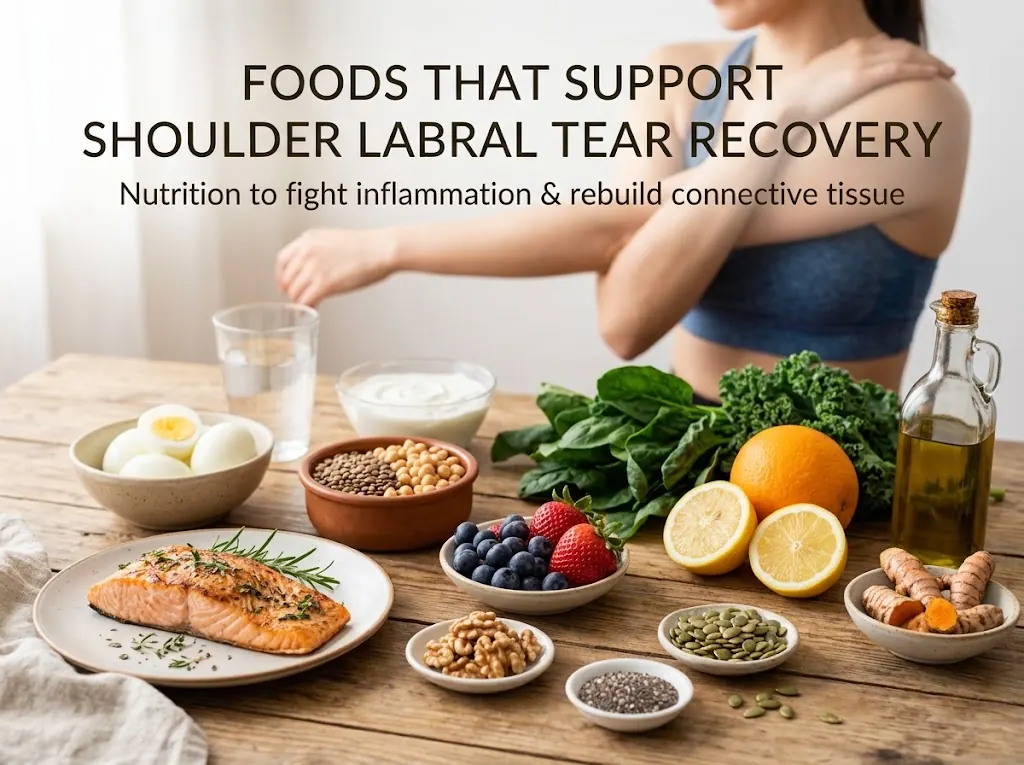
A shoulder labral tear can cause pain, clicking, weakness, and difficulty with everyday movements such as lifting groceries, getting dressed, or reaching overhead. Recovery may involve physical therapy, activity modifications, and sometimes surgery. Nutrition also matters because the body needs adequate energy, protein, vitamins, and minerals to maintain and repair tissues.
Many people wonder whether particular foods can help a torn shoulder labrum heal faster. Although a balanced diet supports normal tissue repair and overall health, no food or supplement has been proven to heal a shoulder labral tear on its own. The type of tear, its severity, blood supply, and the treatment plan all influence recovery.
Choosing nutrient-rich foods can help provide the building blocks your body needs during rehabilitation. This guide explains which foods may support shoulder labral tear recovery, which nutrients matter, what to limit, and when supplements may be worth discussing with a healthcare professional.
Can Food Help a Shoulder Labral Tear Heal?
A nutritious diet can support the body’s normal healing processes, but it cannot reliably repair a torn shoulder labrum by itself. The labrum is a ring of fibrocartilage that deepens the shoulder socket and contributes to joint stability. Its limited blood supply can make healing more challenging than healing in some other tissues.
Treatment depends on the tear’s location, symptoms, and effect on shoulder function. Some people improve with activity modification and physical therapy, while others may need surgery. Understanding shoulder labral tear treatment options, including physical therapy and surgery can help put nutrition into the context of a broader recovery plan.
Which Foods May Support Shoulder Labral Tear Recovery?
No single food is a treatment for a labral tear. Instead, focus on a varied eating pattern that provides enough protein, energy, healthy fats, vitamins, and minerals.
| Nutrient | Food sources | Why it matters during recovery |
|---|---|---|
| Protein | Eggs, fish, chicken, beans, lentils, tofu, Greek yogurt | Supplies amino acids needed for tissue maintenance and repair |
| Vitamin C | Oranges, strawberries, kiwi, bell peppers, broccoli | Supports collagen formation and normal wound healing |
| Vitamin D | Fatty fish, fortified milk, fortified plant beverages, eggs | Supports calcium regulation and bone health |
| Calcium | Yogurt, milk, calcium-fortified plant beverages, calcium-set tofu | Helps maintain healthy bones |
| Zinc | Meat, shellfish, beans, nuts, seeds, whole grains | Supports normal tissue repair and immune function |
| Omega-3 fats | Salmon, sardines, trout, walnuts, chia seeds, flaxseed | Provide essential fats; some sources may help support a healthy inflammatory response |
1. Eat enough protein
Protein is important for maintaining muscle and supporting tissue repair, particularly when shoulder pain reduces activity. Include a protein source with meals, such as eggs at breakfast, beans or chicken at lunch, and fish, tofu, or lentils at dinner.
Adequate protein may also help limit muscle loss during periods of reduced activity. People with kidney disease or other conditions affecting protein needs should ask their clinician or dietitian how much is appropriate.
2. Choose fruits and vegetables rich in vitamin C
Vitamin C is needed for collagen production, which is important in connective tissues. Include foods such as citrus fruits, berries, kiwi, bell peppers, and broccoli regularly.
Eating more vitamin C than your body needs has not been shown to repair a torn labrum faster. Food sources are usually a practical first choice unless a healthcare professional identifies a deficiency or another reason for supplementation.
3. Include vitamin D and calcium sources
Vitamin D helps the body absorb calcium, supporting bone health. These nutrients are especially relevant to overall musculoskeletal health, although they are not a direct treatment for a cartilage tear.
Fatty fish, fortified dairy products, and fortified plant beverages can help provide vitamin D, while dairy products, calcium-fortified beverages, and suitable tofu provide calcium. For more context, see how vitamin D relates to bone pain and deficiency.
4. Add healthy fats and omega-3 sources
Salmon, sardines, walnuts, chia seeds, and flaxseed provide unsaturated fats or omega-3 fatty acids. These can fit into a balanced eating pattern that supports general health.
However, eating these foods should not be presented as a way to eliminate shoulder inflammation or close a tear. If you enjoy fish, including it regularly can be one useful part of a varied diet.
What Does a Balanced Recovery Plate Look Like?
A simple approach is to combine a protein source, vegetables or fruit, whole grains or another carbohydrate, and a source of healthy fat. This helps provide energy and nutrients without relying on restrictive diets or expensive supplements.
| Meal | Example | Nutritional benefit |
|---|---|---|
| Breakfast | Eggs, whole-grain toast, and berries | Protein, carbohydrates, and vitamin C |
| Lunch | Lentil bowl with brown rice, vegetables, and olive oil | Protein, fiber, and unsaturated fats |
| Snack | Greek yogurt with fruit and nuts | Protein, calcium, and other micronutrients |
| Dinner | Baked salmon, sweet potato, and broccoli | Protein, omega-3 fats, and vitamins |
Portion sizes should reflect your appetite, activity level, medical needs, and overall energy requirements. You do not need to follow this exact menu to support recovery.
Foods and Habits to Limit During Recovery
There is no universally forbidden food for a shoulder labral tear. The main priority is to avoid dietary patterns that make it difficult to meet nutritional needs.
Consider these practical steps:
- Limit frequent highly processed foods when they displace protein-rich foods, fruits, vegetables, and whole grains.
- Avoid crash diets or severe calorie restriction. Not eating enough can make it harder to meet the body’s energy and nutrient needs.
- Keep alcohol moderate or avoid it during recovery, particularly around surgery, when it may interfere with medication safety and healing.
- Do not smoke or use nicotine if possible. Nicotine exposure can impair tissue healing, making cessation an important consideration before and after surgery.
- Be cautious with supplements marketed as cartilage-repair products. Strong claims that a product can rebuild a torn labrum are not well established.
For more dietary context, explore foods that may help reduce inflammation as part of a balanced diet and foods that may worsen joint inflammation.
Do You Need Supplements for a Shoulder Labral Tear?
Most people should aim to meet their nutrient needs through food first. A supplement may be useful when a confirmed deficiency, dietary restriction, or medical condition makes adequate intake difficult, but taking extra nutrients does not guarantee faster recovery.
High doses of certain vitamins and minerals can cause side effects or interact with medications. Before using vitamin D, zinc, collagen, fish oil, or combination products, discuss your needs with a healthcare professional—especially if you take blood-thinning medication, have kidney disease, or are preparing for surgery.
Research on nutrition and connective-tissue healing supports the importance of adequate overall nutrition, but evidence that a specific food or supplement speeds healing of a shoulder labral tear remains limited. Avoid treating general findings about collagen, inflammation, or wound healing as proof that a product can repair this particular injury.
Nutrition Works Best Alongside Appropriate Treatment
Food is only one part of recovery. Follow your clinician’s guidance about activity restrictions, rehabilitation, and whether further evaluation is needed. Avoid returning too quickly to heavy lifting or painful overhead exercise just because you are eating well.
A labral tear may cause symptoms such as deep shoulder pain, catching, clicking, or a feeling of instability. If symptoms persist, worsen, or interfere with daily activities, arrange a medical assessment. A clinician may use a physical examination and imaging when appropriate to evaluate the injury.
Learn about early signs and symptoms of a shoulder labral tear and how doctors assess a labral tear using shoulder MRI. For safe activity planning, see exercises to avoid with a shoulder labral tear and practical ways to manage everyday life with a labral tear.
Seek urgent care after a significant injury if the shoulder appears deformed, you cannot move your arm, or you develop sudden severe pain, new marked numbness, or a cold or pale hand.
Frequently Asked Questions
1. What is the best food for a shoulder labral tear?
There is no single best food that heals a labral tear. A balanced diet containing protein, fruits, vegetables, whole grains, and healthy fats is a sensible way to meet nutritional needs during recovery.
2. Does protein help a torn shoulder labrum heal?
Protein supplies amino acids needed for normal tissue maintenance and repair. Getting enough protein is helpful, but eating extra protein beyond your needs has not been shown to repair a labral tear.
3. Can collagen supplements heal a shoulder labral tear?
There is insufficient evidence that collagen supplements can heal a torn shoulder labrum. Ask a healthcare professional whether a supplement fits your needs, and do not use it as a substitute for appropriate treatment.
4. Is vitamin C good for shoulder labral tear recovery?
Vitamin C supports collagen formation and normal wound healing. Fruits and vegetables are useful sources, but extra vitamin C has not been proven to make a labral tear heal faster.
5. Should I take vitamin D for a shoulder labral tear?
Vitamin D supports bone health, but it is not a direct treatment for a labral tear. Supplementation may be appropriate if your intake is inadequate or a clinician identifies a deficiency.
6. Do anti-inflammatory foods reduce labral tear pain?
A balanced eating pattern that includes vegetables, fruits, whole grains, nuts, and fish supports general health. However, no particular food has been shown to reliably relieve pain caused by a torn labrum.
7. Should I avoid sugar while my shoulder heals?
You do not necessarily need to eliminate sugar completely. Limiting sugary foods and drinks that displace more nutritious options can help you maintain a balanced diet.
8. Does drinking more water help a shoulder labral tear heal?
Staying hydrated supports normal bodily functions, but drinking excessive amounts of water will not repair a torn labrum. Drink regularly according to thirst and follow any fluid restrictions prescribed for a medical condition.
9. What should I eat after shoulder labral tear surgery?
After surgery, aim for adequate calories, protein, fruits, vegetables, and other nutrient-rich foods as tolerated. Follow your surgical team’s instructions, especially if you have medication-related restrictions or postoperative nausea.
10. How long does nutrition take to improve shoulder labral tear recovery?
Nutrition does not have a predictable timeline for healing a labral tear. Recovery depends on the injury, treatment, rehabilitation, and overall health, so discuss expected progress with your clinician.
Conclusion
A balanced diet can support normal tissue repair and help maintain strength during shoulder labral tear recovery, but no food or supplement can guarantee that the labrum will heal. Prioritize adequate protein, varied fruits and vegetables, nutrient-rich meals, and sensible hydration. Combine these habits with appropriate medical care and rehabilitation, and seek professional guidance if symptoms persist or worsen.
Disclaimer: This article is provided for educational and informational purposes only.
This article is for education purpose only and is not a diagnosis or a substitute for medical advice.