
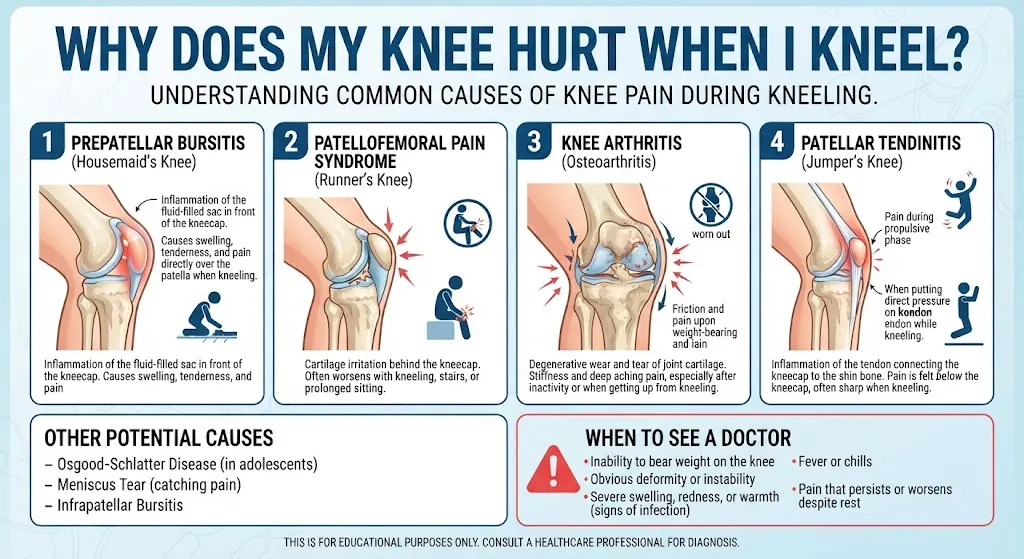
Knee pain when kneeling can make everyday tasks such as gardening, cleaning, praying, playing with children, or working on the floor uncomfortable. The pain may feel like pressure directly over the kneecap, a sharp ache inside the joint, or tenderness that continues after you stand up. Sometimes, the knee hurts only when it touches the ground; in other cases, bending the knee also causes discomfort.
Kneeling puts direct pressure on the front of the knee and bends the joint, which can aggravate sensitive tissues. Although occasional discomfort may follow prolonged pressure, persistent pain, swelling, or difficulty moving the knee should not be ignored. The location and associated symptoms can help distinguish temporary irritation from a problem that needs medical assessment.
Understanding why your knee hurts when you kneel can help you identify common causes, reduce pressure on the joint, and choose appropriate next steps. This guide explains possible causes, practical home care, expected recovery, and warning signs that require medical attention.
What Causes Knee Pain When Kneeling?
The most likely cause depends on where the pain occurs, whether the knee is swollen, and whether symptoms began after an injury.
1. Prepatellar bursitis
Prepatellar bursitis occurs when the small fluid-filled sac in front of the kneecap becomes inflamed. Repeated kneeling, prolonged pressure, or a direct blow can irritate this bursa.
Pain and swelling may develop directly over the kneecap, sometimes creating a noticeable, soft lump. People who frequently kneel for work or household tasks may be more susceptible.
2. Patellofemoral pain
Patellofemoral pain affects the area around or behind the kneecap. It may worsen when kneeling deeply, climbing stairs, squatting, or standing after sitting for a long time.
Unlike bursitis, this condition does not necessarily cause visible swelling directly over the kneecap. Read about why knee pain develops when bending for additional movement-related symptoms.
3. Knee osteoarthritis
Osteoarthritis involves changes in the cartilage and other tissues within the joint. It may cause stiffness, aching, reduced flexibility, and discomfort during deep knee bending.
Symptoms can be more noticeable after inactivity or repeated activity. Learn about knee arthritis symptoms and treatment options to understand how the condition is managed.
4. Meniscus injury
The menisci are cartilage structures that help distribute forces within the knee. A meniscus tear can cause pain along the inner or outer joint line, especially when the knee bends deeply or twists.
Swelling, catching, or locking may accompany the pain, although symptoms vary. See meniscus tear symptoms and recovery options for more information.
5. Patellar tendinopathy
The patellar tendon connects the kneecap to the shinbone. Tendon irritation often causes pain just below the kneecap, particularly during jumping, running, or repeated knee bending.
Kneeling may aggravate the area because of direct pressure or the position of the joint. More information is available about patellar tendonitis symptoms and treatment.
6. Direct injury or skin irritation
A bruise, cut, abrasion, or other injury can make the front of the knee sensitive to contact. A fall onto the knee can also cause a fracture or damage deeper structures, especially when pain is severe or weight-bearing becomes difficult.
How Can You Tell What Might Be Causing the Pain?
The pattern of symptoms may provide clues, but it cannot confirm a diagnosis.
| Symptom pattern | Possible cause | What to notice |
|---|---|---|
| Swelling directly over the kneecap | Prepatellar bursitis | A tender, visible lump |
| Pain around or behind the kneecap | Patellofemoral pain | Discomfort with stairs or squats |
| Stiffness and aching during movement | Osteoarthritis | Symptoms after rest or activity |
| Pain along the inner or outer joint line | Meniscus injury | Catching, twisting pain, or locking |
| Tenderness just below the kneecap | Patellar tendinopathy | Pain with jumping or repeated loading |
Several conditions can produce overlapping symptoms. A clinician can assess the knee and determine whether further testing is necessary.
How Can You Relieve Knee Pain When Kneeling?
The most useful first step is to reduce direct pressure on the painful area while maintaining comfortable movement.
Avoid prolonged pressure
Temporarily limit kneeling, deep squats, and other positions that increase pain. If kneeling is necessary, use a thick, supportive cushion or knee pad and change positions regularly. Do not continue kneeling if it causes sharp pain or worsening swelling.
Apply cold therapy
A cold pack wrapped in a towel may help reduce discomfort and swelling. Apply it for approximately 15–20 minutes at a time, avoiding direct contact between ice and skin.
Maintain comfortable activity
You may be able to continue walking or other low-impact activities if they do not aggravate symptoms. Avoid exercises that increase pain or cause the knee to become more swollen.
Consider low-impact exercises for people with joint pain when you are ready to remain active without excessive joint loading.
Use medication cautiously
Some people may benefit from an over-the-counter pain reliever or anti-inflammatory medication. However, these medicines can have risks, including stomach bleeding, kidney problems, and medication interactions. Ask a healthcare professional or pharmacist which option is appropriate for you, particularly if you have existing medical conditions or take other medicines.
Avoid attempting to drain a swollen bursa yourself, as this can introduce an infection.
How Long Does Knee Pain From Kneeling Last?
Recovery depends on the underlying cause, the severity of irritation, and whether the knee continues to experience pressure.
| Possible cause | General recovery expectations |
|---|---|
| Mild pressure-related irritation | May improve within several days after reducing pressure |
| Bruising or minor soft-tissue injury | Often improves over days to a few weeks |
| Prepatellar bursitis | May take several weeks or longer, depending on severity |
| Patellofemoral pain or tendon problems | May require weeks to months of appropriate rehabilitation |
| Osteoarthritis | Often requires ongoing symptom management |
These timelines are approximate rather than guarantees. Persistent or worsening symptoms should be evaluated rather than managed indefinitely at home.
When Should You See a Doctor for Knee Pain When Kneeling?
Symptoms you can monitor
Mild tenderness after prolonged kneeling may improve with pressure relief and activity modification, particularly when there is no significant swelling and movement remains comfortable.
Symptoms requiring medical evaluation
Arrange an appointment if pain repeatedly returns, swelling persists, a lump develops over the kneecap, or symptoms interfere with walking and daily activities. Pain that continues despite reducing pressure also warrants assessment.
If the knee becomes swollen, review when fluid buildup in the knee may be serious.
Symptoms requiring urgent care
Seek urgent medical attention if the knee becomes hot, red, and markedly swollen, particularly with fever or chills. This can indicate an infection that requires prompt treatment.
Urgent evaluation is also appropriate after a significant injury if you cannot bear weight, cannot straighten the knee, develop substantial swelling, or experience severe pain.
How Is Knee Pain When Kneeling Diagnosed?
A healthcare professional will ask about the onset of symptoms, recent injuries, work activities, and whether pain occurs only with direct pressure or also during movement.
The examination may include checking swelling, tenderness, skin changes, range of motion, and joint stability. X-rays may be recommended if a fracture or arthritis is suspected. Ultrasound can help assess superficial swelling, while MRI may be considered when an internal knee injury is suspected.
Not everyone needs imaging. The decision depends on the examination findings and clinical history.
Frequently Asked Questions
1. Why does my knee hurt only when I kneel?
Direct pressure may irritate the bursa, skin, or other sensitive tissues over the kneecap. Pain that occurs only with contact differs from pain that also occurs during walking or bending, but persistent symptoms still deserve assessment.
2. Why is there a lump on my knee after kneeling?
A soft swelling over the kneecap may indicate prepatellar bursitis, especially after repeated kneeling. A new or painful lump should be evaluated if it persists, becomes red, or grows.
3. Can kneeling cause bursitis?
Yes. Repeated pressure or a direct blow can inflame the bursa in front of the kneecap. Reducing pressure is important, and significant swelling or warmth may require medical evaluation.
4. Is knee pain when kneeling a sign of arthritis?
It can be associated with arthritis, but it is not specific to that condition. Bursitis, tendon irritation, and other problems can produce similar pain.
5. Should I stop kneeling if my knee hurts?
Avoid or reduce kneeling when it causes pain, particularly if symptoms worsen with continued pressure. Use cushioning when returning to the activity and stop if discomfort increases.
6. Does a knee pad help with kneeling pain?
A well-cushioned knee pad may reduce direct pressure and improve comfort. It will not treat every underlying condition, so persistent pain should not be ignored.
7. Can knee pain when kneeling occur without swelling?
Yes. Tendon irritation, patellofemoral pain, and some joint conditions can cause pain without visible swelling. The absence of swelling does not rule out an injury.
8. Should I use ice or heat for knee pain?
Cold therapy may help with recent irritation and swelling. Gentle heat may relieve stiffness in some situations, but avoid applying heat to a hot, red, or acutely swollen knee without medical guidance.
9. Can I exercise with knee pain from kneeling?
Comfortable, low-impact activity may be appropriate if it does not worsen symptoms. Avoid deep knee bends or direct pressure that reproduces pain until the cause is clearer.
10. When does kneeling-related knee pain need urgent treatment?
A hot, red, swollen knee with fever requires urgent assessment because infection is possible. Severe pain, inability to bear weight, or major swelling after an injury also warrants prompt medical attention.
Conclusion
Knee pain when kneeling commonly results from pressure-related irritation, bursitis, kneecap pain, tendon problems, or arthritis. Reduce direct pressure, use cushioning, and maintain comfortable activity while monitoring your symptoms. Persistent pain, new swelling, or reduced mobility deserves medical evaluation, while signs of infection or a significant injury require urgent care.
Disclaimer: This article is provided for educational and informational purposes only.
This article is for education purpose only and is not a diagnosis or a substitute for medical advice.