
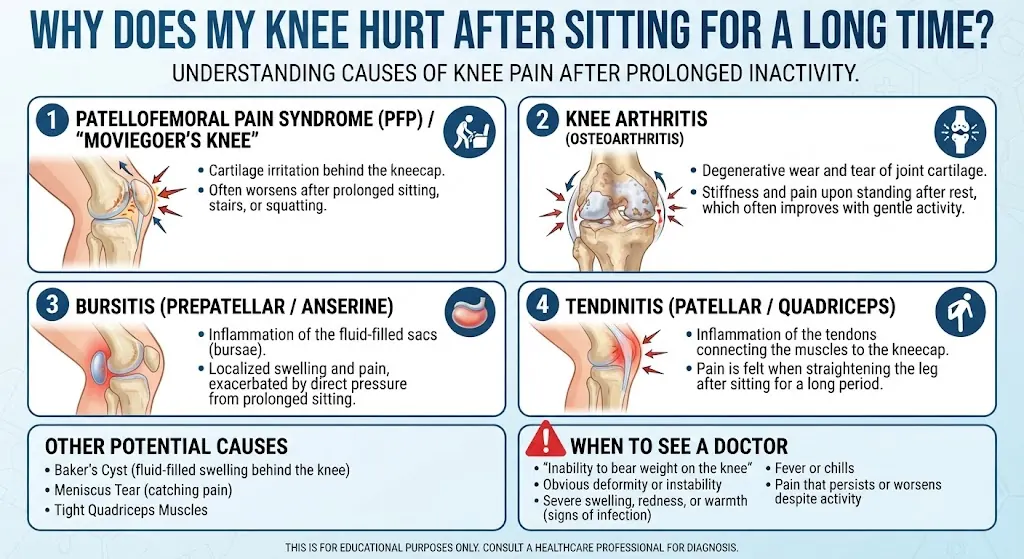
This pattern is common and does not always mean you have a serious knee problem. However, repeated pain, persistent stiffness, swelling, or difficulty straightening your leg deserves attention, especially if symptoms are getting worse.
Understanding why your knee hurts after sitting for a long time can help you identify possible causes, make sitting more comfortable, and know when to seek medical care. The location of your pain, how long the stiffness lasts, and whether you have other symptoms can help guide the next steps.
Why Does Your Knee Hurt After Sitting for a Long Time?
Knee pain after prolonged sitting often happens because the joint remains bent for an extended period, placing sustained pressure on structures around the kneecap. Stiffness may also become more noticeable when an underlying joint condition is present.
Common possibilities include:
-
Patellofemoral pain: Pain around or behind the kneecap that can worsen when sitting with bent knees.
-
Knee osteoarthritis: Joint changes that can cause aching and stiffness after rest, particularly in middle-aged and older adults.
-
Meniscus problems: Irritation or a tear in the cartilage that cushions the knee, sometimes causing catching, locking, or pain with twisting.
-
Tendon or soft-tissue irritation: Pain around the knee that may worsen after certain activities or prolonged positioning.
-
Inflammation or joint fluid: Swelling can make bending the knee uncomfortable and movement feel restricted.
These conditions can overlap, so pain after sitting alone cannot identify the exact cause. For a broader overview, see common causes of knee pain and when to see a doctor.
What Does Knee Pain After Sitting Feel Like?
The symptoms vary depending on the cause. Some people notice stiffness only when they first stand, while others experience pain around the kneecap or deeper inside the joint.
| Symptom | Possible explanation | What to notice |
|---|---|---|
| Stiffness when standing | Joint stiffness after rest | Whether movement gradually helps |
| Pain behind or around the kneecap | Patellofemoral pain or arthritis | Whether stairs or squats also hurt |
| Pain with catching or twisting | Possible meniscus irritation | Whether the knee catches or locks |
| Swelling and warmth | Inflammation or fluid buildup | Whether swelling appeared suddenly |
| Persistent pain at rest | Several possible joint conditions | Whether symptoms are worsening or disturbing sleep |
Pain location can offer clues, but it cannot confirm a diagnosis. For example, pain behind the kneecap may have different causes from pain along the inner or outer knee.
What Makes Knee Pain Worse After Sitting?
Several factors may aggravate symptoms:
-
Sitting with your knees deeply bent for a long time.
-
Keeping the same position without movement breaks.
-
Returning to strenuous exercise after being inactive.
-
Repeatedly climbing stairs, squatting, or kneeling when these movements trigger pain.
-
Sitting in a low chair that makes standing up difficult.
If your knee hurts during bending as well as after rest, why your knee hurts when bending may help explain the difference between movement-related symptoms and stiffness after sitting.
What Can You Do at Home to Relieve Knee Pain After Sitting?
If the pain is mild and you can walk normally, small changes to your daily routine may help reduce stiffness. The goal is to keep the knee moving comfortably without repeatedly aggravating it.
| What to try | How it may help | Important caution |
|---|---|---|
| Take regular movement breaks | Reduces time spent with the knee bent | Stand slowly and use support if needed |
| Gently straighten and bend the knee | Maintains comfortable movement | Stop if pain sharply increases |
| Apply ice for up to 20 minutes | May ease pain and swelling | Wrap ice in a towel |
| Use a supportive chair | Makes standing easier | Avoid positions that increase pain |
| Try low-impact activity | Builds strength and supports mobility | Increase activity gradually |
For general joint-friendly movement, explore low-impact exercises for joint pain. If symptoms keep returning, a physical therapist can help develop a plan suited to your knee and activity level.
Avoid forcing deep knee bends, intense squats, or painful stretches. Over-the-counter pain medicines may help some people, but they are not suitable for everyone; ask a pharmacist or clinician if you have other health conditions or take other medications.
How Long Does Knee Pain After Sitting Last?
Temporary stiffness may ease after a few steps or minutes of gentle movement. Pain that repeatedly returns, lasts for weeks, or limits everyday activities may need assessment rather than continued self-treatment.
| Pattern | Reasonable next step |
|---|---|
| Mild stiffness that quickly settles | Monitor symptoms and take movement breaks |
| Recurrent pain with stairs or bending | Arrange a routine clinical assessment |
| Persistent swelling or worsening pain | Seek medical evaluation promptly |
| Sudden severe pain, major swelling, or inability to bear weight | Seek urgent care |
Research-based clinical guidance recognizes prolonged sitting with bent knees as a typical trigger for patellofemoral pain, especially when pain is felt around or behind the kneecap. However, this pattern alone does not prove that the kneecap is the source.
Other symptoms can help guide evaluation. For example, knee arthritis symptoms and treatment may be relevant when stiffness recurs, while meniscus tear symptoms and recovery may be worth discussing if pain follows a twist or comes with catching.
When Should You See a Doctor?
Symptoms you can usually monitor
Mild stiffness that improves with movement and does not interfere with walking can often be monitored briefly while you adjust your routine.
Symptoms needing medical evaluation
Schedule an appointment if knee pain persists, repeatedly returns, affects sleep, or makes normal activities difficult. Also get checked if the knee locks, gives way, or develops ongoing swelling. Read more about when fluid on the knee needs medical attention.
Symptoms requiring urgent care
Seek urgent medical care if you cannot bear weight, the knee becomes severely swollen or deformed, or you develop a hot, red knee with fever or chills. Sudden severe pain after an injury also warrants prompt assessment. These symptoms can indicate a significant injury or, less commonly, a joint infection.
A clinician may ask when the pain starts, examine your knee’s movement and stability, and recommend imaging only if it is appropriate. Depending on the findings, treatment may involve activity changes, targeted exercise, medication, or further evaluation.
Frequently Asked Questions
1. Why does my knee hurt when I stand up after sitting?
The joint may feel stiff after remaining bent, or the kneecap area may be sensitive to prolonged pressure. Repeated symptoms can also occur with arthritis or other knee conditions.
2. Is knee pain after sitting a sign of arthritis?
It can be, particularly when stiffness and aching recur. However, patellofemoral pain and other conditions can cause similar symptoms.
3. Why does the pain improve after I walk?
Gentle movement can reduce the sensation of stiffness after rest. Improvement with walking does not identify the underlying cause.
4. Can sitting too long damage my knees?
Sitting itself does not necessarily damage the joint. Staying in one position may aggravate existing symptoms, especially when your knees remain deeply bent.
5. Why does only one knee hurt after sitting?
One knee may be affected by a previous injury, uneven loading, or a localized joint problem. Persistent one-sided pain deserves evaluation if it does not improve.
6. Should I stretch my knee after sitting?
Gentle bending and straightening may help if comfortable. Do not force the movement through sharp pain or a feeling of blockage.
7. Can knee pain after sitting be caused by a meniscus tear?
Yes, especially if symptoms began after twisting the knee or include catching or locking. A clinical examination is needed to assess the cause.
8. Should I use ice or heat?
Ice may help when pain or swelling is present. Gentle heat may feel soothing for stiffness, but avoid heat on a hot, red, swollen knee.
9. When should I worry about knee swelling?
New, significant, or worsening swelling needs medical assessment. A hot, red knee with fever or chills requires urgent care.
10. Can exercise prevent knee pain after sitting?
Appropriate strengthening and low-impact activity may improve function and reduce symptoms for some people. Choose movements that do not significantly worsen your pain.
Conclusion
Knee pain after sitting for a long time may reflect temporary stiffness, kneecap-related pain, arthritis, or another joint problem. Take movement breaks, avoid painful positions, and return to activity gradually. If pain persists, worsens, or comes with swelling or restricted movement, seek medical advice; urgent warning signs should not be ignored.
Disclaimer: This article is provided for educational and informational purposes only.
This article is for education purpose only and is not a diagnosis or a substitute for medical advice.