
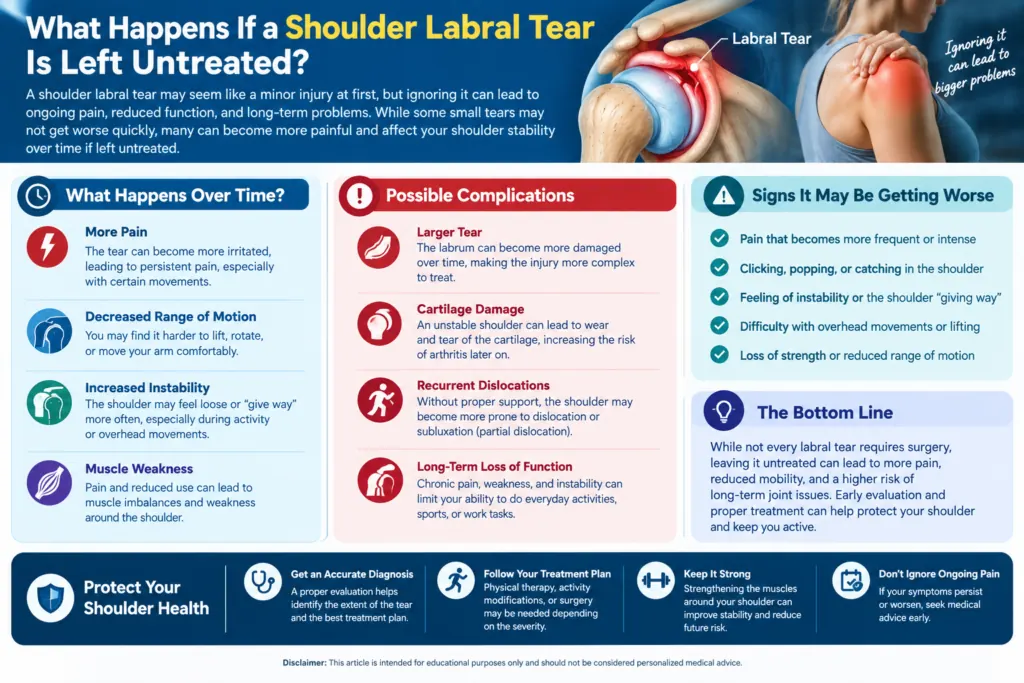
A shoulder labral tear can cause deep shoulder pain, clicking, weakness, or a feeling that the joint may slip out of place. These symptoms can interfere with lifting, sleeping, working, and exercising. Some people have mild symptoms, while others experience recurring pain or instability that makes everyday movements difficult.
Leaving a shoulder labral tear untreated does not always lead to serious complications. Some people improve with activity modification and rehabilitation, but others continue to experience symptoms or develop functional limitations. The outcome depends on the tear’s location, severity, cause, and whether the shoulder is unstable.
Understanding what happens if a shoulder labral tear is left untreated can help you decide when to modify activities, seek an evaluation, and consider treatment. This guide explains possible long-term effects, warning signs, and practical steps to protect your shoulder.
What Happens If You Do Not Treat a Shoulder Labral Tear?
An untreated shoulder labral tear may remain stable, improve symptomatically, or cause ongoing pain and instability. It does not automatically worsen, and pain severity alone cannot tell you whether the tear is getting larger.
The labrum is cartilage-like tissue that helps deepen the shoulder socket and stabilize the joint. When it is injured, symptoms can depend on the tear’s location and whether other structures are affected. Learn more about what a shoulder labral tear is, including its symptoms and causes.
Potential consequences include:
- Persistent or recurring shoulder pain.
- Pain during overhead movements, lifting, or throwing.
- Reduced strength or confidence when using the affected arm.
- Catching, clicking, or painful movement.
- Shoulder instability, particularly when the injury is associated with dislocation.
Not everyone develops these problems. Reviewing the early signs and symptoms of a shoulder labral tear may help you identify changes that deserve medical attention.
Can an Untreated Labral Tear Get Worse?
Yes, a labral tear can become more symptomatic and may progress in some circumstances, especially when repeated strain or shoulder instability continues. However, a flare-up does not necessarily mean the tissue damage has increased.
Activities involving repeated overhead movement, heavy lifting, sudden pulling, or contact sports may aggravate symptoms. The type of injury also matters: a SLAP tear versus a Bankart tear affects different regions of the labrum and can have different implications for shoulder stability.
| Possible change | What it may mean |
|---|---|
| Pain after activity | The shoulder may be irritated or overloaded |
| Persistent weakness | Pain, reduced use, or another injury may affect strength |
| Repeated slipping or giving way | Shoulder instability may need evaluation |
| Painful catching or reduced movement | The tear or another shoulder condition may be contributing |
These symptoms cannot confirm that a tear has progressed. A clinician can assess shoulder movement, strength, stability, and whether imaging is appropriate.
What Activities Should You Avoid With an Untreated Labral Tear?
You do not necessarily need to stop all physical activity. Instead, reduce or temporarily avoid movements that consistently trigger sharp pain, catching, or instability.
| Activity | Why modification may help |
|---|---|
| Heavy overhead presses | They place substantial demands on the shoulder |
| Repeated throwing or serving | Repetitive high-speed motion can aggravate symptoms |
| Deep dips or painful push-ups | Certain positions may increase shoulder stress |
| Heavy lifting far from the body | Longer lever positions can increase shoulder demand |
The safest limits depend on your injury and symptoms. Use this guide to exercises to avoid with a shoulder labral tear and learn common mistakes that may aggravate a labral tear.
Can a Shoulder Labral Tear Heal Without Surgery?
Some people improve without surgery through activity modification, physical therapy, and symptom management. However, improvement in pain does not necessarily mean the torn tissue has completely healed.
Treatment depends on the type of tear, shoulder stability, activity demands, and response to rehabilitation. Explore whether a shoulder labral tear can heal without surgery and how physical therapy compares with surgery for a labral tear.
| Treatment approach | Main purpose | Important consideration |
|---|---|---|
| Activity modification | Reduce repeated aggravation | Avoid excessive restriction without clinical advice |
| Physical therapy | Improve movement, strength, and control | Exercises should match the injury and symptoms |
| Surgery | Repair or address selected injuries | Benefits, risks, and recovery requirements vary |
A clinician may recommend imaging, including MRI in selected cases, when examination findings suggest that it could clarify the injury or guide treatment.
When Should You See a Doctor?
Arrange an appointment if shoulder pain persists, repeatedly returns, limits normal activities, or comes with increasing weakness or instability. An assessment is especially important if the shoulder has dislocated or repeatedly feels as though it may slip out of place.
Seek urgent medical care after an injury if you have severe pain, a visible shoulder deformity, or cannot move the arm normally. Sudden numbness, marked weakness, or a cold or pale arm also requires emergency assessment.
For ongoing symptoms, a clinician may consider other causes, including a rotator cuff tear versus a labral tear, because these conditions can produce overlapping symptoms.
Frequently Asked Questions
1. Can I live with an untreated shoulder labral tear?
Some people manage symptoms without surgery, particularly when the shoulder remains stable and daily function is preserved. Persistent pain or instability should still be assessed.
2. Will an untreated labral tear eventually need surgery?
Not necessarily. Surgery depends on symptoms, the injury pattern, shoulder stability, activity needs, and whether nonsurgical treatment provides sufficient improvement.
3. Can a labral tear cause permanent shoulder damage?
A tear does not automatically cause permanent damage. However, persistent instability or repeated shoulder dislocations can create additional problems and warrant medical evaluation.
4. How do I know if my labral tear is getting worse?
Increasing pain, reduced function, weakness, or repeated instability may signal a change. These symptoms do not prove that the tear has enlarged, so a clinical assessment may be needed.
5. Should I keep exercising with a labral tear?
You may be able to continue modified exercise if it does not provoke symptoms or instability. Avoid pushing through sharp pain and seek guidance before returning to heavy or overhead training.
6. Can physical therapy help an untreated labral tear?
Physical therapy may improve shoulder strength, movement, and control without surgery. A tailored program is preferable to exercises chosen without considering the injury.
7. Can sleeping on the injured shoulder make it worse?
Sleeping on that side may increase discomfort, although pain does not necessarily mean the tear is progressing. Try supporting the arm in a comfortable position that avoids direct pressure.
8. Can a labral tear cause shoulder dislocations?
Some labral injuries, particularly those associated with shoulder dislocation, can contribute to instability. Repeated slipping or dislocation deserves prompt clinical evaluation.
9. Can I work with an untreated shoulder labral tear?
Many people can work with suitable adjustments, depending on their symptoms and job demands. Repetitive overhead tasks and heavy lifting may require temporary restrictions.
10. When should I consider getting an MRI?
A clinician may recommend MRI if symptoms, examination findings, or suspected instability make imaging useful for treatment decisions. Imaging findings should be interpreted alongside symptoms and physical examination.
Conclusion
An untreated shoulder labral tear may remain manageable, but persistent pain, weakness, or instability can interfere with daily life and sometimes indicate a more significant problem. Modify activities that aggravate symptoms, consider guided rehabilitation, and seek medical evaluation when symptoms persist or worsen. Early assessment can help clarify your options before returning to demanding activities.
Disclaimer: This article is provided for educational and informational purposes only.
This article is for education purpose only and is not a diagnosis or a substitute for medical advice.