
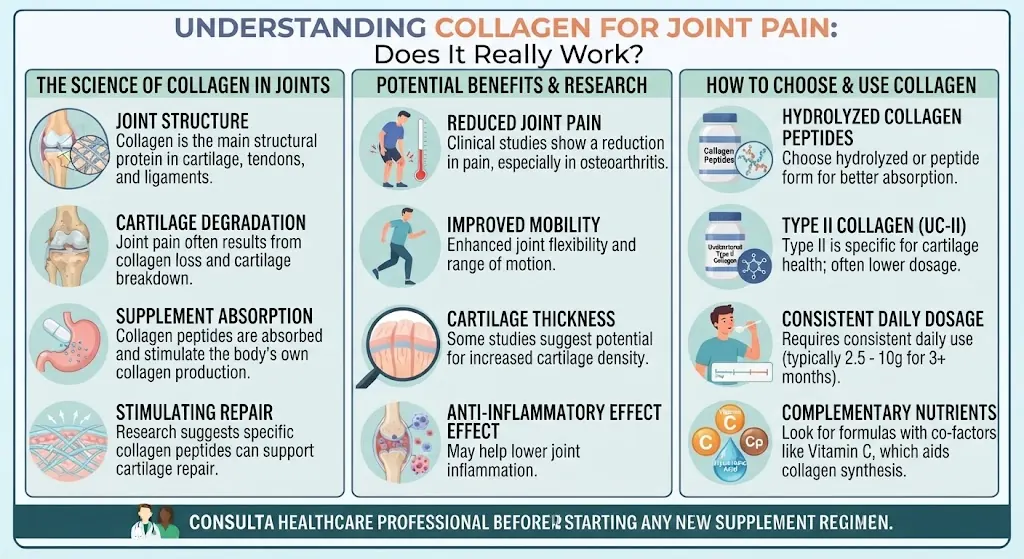
Joint pain can make everyday activities such as walking, climbing stairs, exercising, or getting out of a chair uncomfortable. If you have been considering collagen supplements, you may be wondering whether they can reduce stiffness, protect cartilage, or help your joints recover.
Collagen may provide modest relief for some people with joint pain, particularly osteoarthritis, but the evidence is mixed. Results vary by supplement type, dose, study design, and individual health needs. Collagen is not a proven cure, and it cannot reliably rebuild damaged cartilage.
This guide explains how collagen works, what research suggests, which types are available, how to use supplements more safely, and when joint pain deserves medical evaluation.
What Is Collagen, and Why Do Joints Need It?
Collagen is a structural protein found throughout the body. It helps provide strength and support to cartilage, tendons, ligaments, bones, skin, and other connective tissues.
Articular cartilage covers the ends of bones where they meet inside a joint. It helps surfaces move smoothly and distributes forces during movement. Collagen is an important part of this tissue, but cartilage also contains water, proteoglycans, and other components that work together.
The body produces collagen from amino acids obtained through protein-rich foods and normal protein metabolism. Vitamin C is also necessary for collagen formation. Eating enough protein and getting adequate nutrients supports normal tissue maintenance, but it does not guarantee that existing cartilage damage will heal.
Does Collagen Help Joint Pain?
Research suggests collagen supplements may improve pain or function for some people, but the benefits are not consistent or guaranteed.
Clinical studies have examined collagen products in people with osteoarthritis and in physically active adults with exercise-related joint discomfort. Some trials report improvements in pain, stiffness, or physical function, while others find smaller or less certain effects.
Differences in product formulation, study duration, participant characteristics, and outcome measurements make results difficult to compare. Some studies are also small or have other limitations, so positive findings should not be interpreted as proof that all collagen products work.
| Collagen type | What it is | What to know |
|---|---|---|
| Hydrolyzed collagen peptides | Collagen broken into smaller protein fragments | Studied for possible improvements in joint symptoms; evidence remains mixed |
| Undenatured type II collagen | Collagen prepared to retain its structure | Studied mainly for osteoarthritis-related symptoms; findings cannot be generalized to every product |
| Gelatin | A protein derived from collagen | Provides amino acids but is not interchangeable with every studied collagen formulation |
Collagen supplements are digested into peptides and amino acids, which the body can use in different tissues. Researchers are also investigating whether certain collagen-derived peptides or immune responses have specific effects, but the mechanisms and clinical importance are not fully established.
For people with ongoing discomfort, understanding what chronic pain means and how it affects daily life can help put supplements into perspective: managing pain often requires more than one approach.
How Long Does Collagen Take to Work?
If collagen helps, improvement is generally assessed over weeks rather than after a single serving. Many studies have evaluated supplements over several weeks or months, but there is no established timeline that applies to everyone.
A practical approach is to discuss a time-limited trial with a healthcare professional, particularly if you have a diagnosed joint condition. Set a clear goal, such as walking more comfortably or experiencing less stiffness, and stop reassessing the supplement as useful if there is no meaningful improvement.
Do not delay evaluation or effective treatment while waiting for a supplement to work.
How Much Collagen Should You Take?
There is no universally established collagen dose for all types of joint pain. Research has used different amounts depending on the formulation and condition being studied, so a dose that applies to one product may not apply to another.
Before taking collagen:
- Check the ingredient list, serving size, and source of the collagen.
- Review possible allergens, including fish, shellfish, eggs, or other animal-derived ingredients.
- Ask a clinician or pharmacist about possible interactions if you take medication or have a chronic health condition.
- Choose products with credible independent quality testing when available.
Collagen can cause digestive discomfort in some people. People who are pregnant, breastfeeding, have significant medical conditions, or follow medically restricted diets should seek individualized advice before using supplements.
Can You Support Joint Health Without Collagen Supplements?
Yes. Collagen is optional, and joint care does not depend on taking it. A balanced diet, suitable movement, muscle strengthening, and treatment of the underlying cause of pain may be more important.
| Approach | How it may help | Important consideration |
|---|---|---|
| Adequate protein | Supplies amino acids needed for tissue maintenance | Needs vary by age, health, and activity |
| Vitamin C-rich foods | Support normal collagen production | Supplements are usually unnecessary when intake is adequate |
| Low-impact activity | Helps maintain mobility and muscle strength | Adapt activity to symptoms and medical advice |
| Balanced eating pattern | Supports general health and nutritional adequacy | No single food or diet cures arthritis |
If you want to understand which vitamins and minerals support bone and joint health, start by reviewing your overall diet rather than automatically adding several supplements.
You can also explore low-impact exercises for people with joint pain. Gentle movement may help maintain function, although exercises should be adjusted if they cause increasing pain or swelling.
Nutrition is only one part of the picture. Everyday habits that support joint health can help you consider activity, recovery, and other lifestyle factors alongside food choices.
When Should You See a Doctor for Joint Pain?
Arrange a medical appointment if joint pain persists, keeps returning, disrupts sleep, or limits everyday activities. A clinician can assess possible causes, including osteoarthritis, tendon problems, inflammatory conditions, and injuries.
Seek urgent medical care if a joint becomes suddenly hot, red, and swollen, particularly with fever. After an injury, urgent assessment is also important if you cannot bear weight, have a visible deformity, or experience severe pain or swelling.
Collagen should not be used as a substitute for evaluating symptoms that may signal a more serious condition.
Frequently Asked Questions
1. Does collagen rebuild cartilage?
There is not enough reliable evidence to conclude that oral collagen supplements rebuild damaged cartilage in people. Some studies report symptom improvements, but reduced pain does not necessarily mean cartilage has regrown.
2. Which collagen is best for joint pain?
Hydrolyzed collagen peptides and undenatured type II collagen have both been studied, but they are different formulations. There is no universally proven best option, and evidence for one formulation should not automatically be applied to another.
3. Is collagen better than glucosamine for joint pain?
Research on both supplements has mixed results, and there is no definitive evidence that collagen is consistently superior. The best choice depends on your condition, treatment goals, and medical history.
4. Can collagen help knee osteoarthritis?
Some studies suggest collagen products may modestly improve pain or function in people with knee osteoarthritis. They should be considered optional additions rather than replacements for recommended treatment.
5. Can collagen help joint pain caused by exercise?
Some research has investigated collagen in physically active people with joint discomfort, but the evidence is not conclusive. Persistent pain after exercise may reflect an injury or overload that needs a different approach.
6. Can I take collagen every day?
Some collagen products are designed for daily use, but suitability depends on the formulation and your health circumstances. Follow the product instructions and seek professional advice if you have medical conditions or take medication.
7. Does vitamin C make collagen supplements work better?
Vitamin C is essential for the body’s normal collagen production. However, taking extra vitamin C alongside collagen has not been established as a guaranteed way to improve joint-pain outcomes when your nutritional needs are already met.
8. Are there side effects from collagen supplements?
Some people experience digestive discomfort, and reactions may occur because of the product’s source or added ingredients. Check the label carefully and stop using the product if you develop a suspected adverse reaction.
9. Can I get enough collagen from food?
Foods such as gelatin and collagen-containing animal tissues provide collagen or related proteins, while other protein foods supply amino acids used in the body’s own collagen production. No specific food has been proven to reverse joint damage.
10. Should I try collagen before seeing a doctor?
No. If pain is persistent, worsening, or limiting movement, identifying the cause is more important than trying a supplement first. Sudden swelling, fever with a painful joint, or a serious injury requires prompt assessment.
Conclusion
Collagen supplements may offer modest joint-pain relief for some people, but current evidence does not show that they reliably rebuild cartilage or work for everyone. Focus first on understanding the cause of your symptoms, meeting your nutritional needs, and staying active in ways your joints can tolerate. Discuss supplements with a healthcare professional if you are unsure whether they are appropriate for you.
Disclaimer: This article is provided for educational and informational purposes only.
This article is for education purpose only and is not a diagnosis or a substitute for medical advice.