
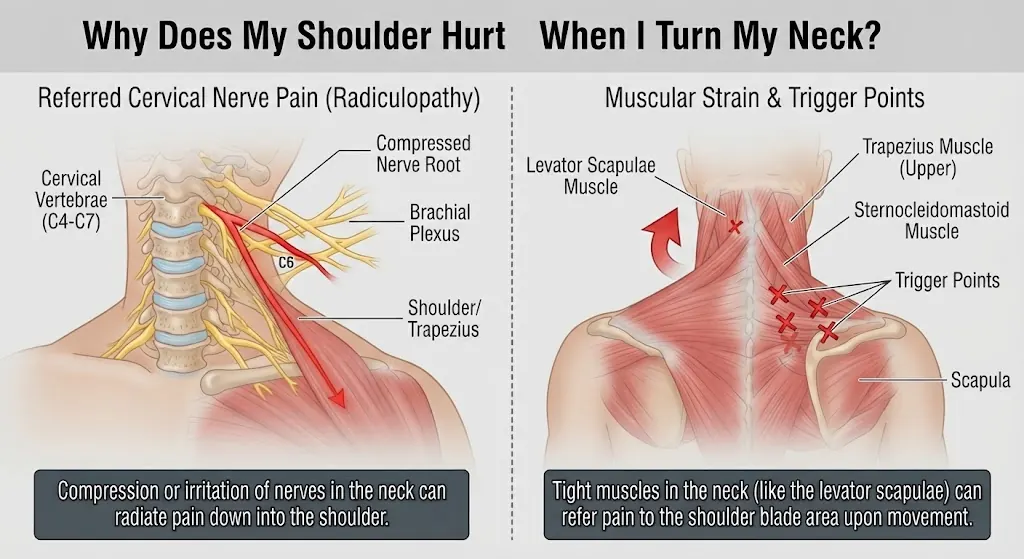
This discomfort is often related to muscle tension or irritation in the neck and upper back. However, pain in this area can also come from cervical spine problems, irritated nerves, or shoulder conditions. Although many causes are manageable, persistent pain, new weakness, and other warning signs should not be ignored.
Understanding why your shoulder hurts between your neck and shoulder can help you identify possible triggers, choose sensible home care, and determine when medical evaluation is appropriate. The location and pattern of your symptoms can provide useful clues, but they cannot confirm a diagnosis on their own.
What Causes Pain Between the Neck and Shoulder?
The upper trapezius muscle is a frequent source of discomfort because it extends across the back of the neck and the top of the shoulder. Other muscles, cervical joints, nerves, and shoulder structures can produce similar pain.
1. Muscle strain and tightness
Muscle strain or tension is a common explanation for pain at the top of the shoulder. It may develop after repetitive activity, prolonged sitting, heavy lifting, sudden movements, or sleeping with the neck in an uncomfortable position.
The pain often feels sore, tight, or tender when you press the affected area. Turning your head or shrugging your shoulder may make it worse. Stress can also contribute to muscle tension, although it should not automatically be assumed to be the cause.
If your discomfort appears related to prolonged sitting, posture correction exercises for neck and shoulder pain may help you understand how to adjust your movement habits.
2. A pinched nerve in the neck
A cervical nerve can become irritated or compressed by a herniated disc or age-related changes in the spine. This condition, called cervical radiculopathy, may cause pain that travels from the neck into the shoulder, shoulder blade, arm, or hand.
Burning or electric-like pain, tingling, numbness, or muscle weakness may accompany the discomfort. These symptoms are more suggestive of nerve involvement than isolated muscle tightness. Read about the symptoms of a pinched nerve in the neck.
3. Cervical arthritis and degenerative changes
Cervical spondylosis involves age-related changes in the discs and joints of the neck. It may cause stiffness, reduced neck rotation, and pain that spreads toward the upper shoulder.
However, these changes are not always painful. Imaging findings need to be interpreted alongside your symptoms and physical examination. Learn about cervical spondylosis symptoms and treatment.
4. Shoulder tendon or joint irritation
Conditions affecting the rotator cuff tendons, bursa, or other shoulder structures can cause pain around the shoulder and sometimes the neck. These problems are more likely when raising your arm, reaching overhead, or lifting objects triggers the discomfort.
For example, shoulder tendonitis symptoms and causes may include localized tenderness and pain during shoulder movement. Neck and shoulder problems can also occur together.
5. Pain referred from the upper back
The muscles and joints around the upper spine and shoulder blades work together with the neck. Irritation in these structures can cause discomfort that spreads toward the top of the shoulder.
If the pain extends toward the middle of your upper back, explore common causes of pain between the shoulder blades.
How Can You Tell Where the Pain Is Coming From?
The way your pain behaves can help narrow down possible causes. The following patterns are clues, not a substitute for a clinical examination.
| Symptom pattern | Possible cause | Other clues |
|---|---|---|
| Tightness across the top of the shoulder | Muscle strain or tension | Tenderness and stiffness |
| Pain when turning or tilting the neck | Neck muscle or joint irritation | Restricted neck movement |
| Pain traveling into the arm | Possible nerve irritation | Tingling, numbness, or weakness |
| Pain when lifting the arm overhead | Shoulder tendon or joint irritation | Pain with reaching |
| Persistent stiffness and reduced neck mobility | Cervical spine changes | Symptoms may fluctuate |
For more context, see neck pain that radiates to the shoulder and different types of shoulder pain.
How Can You Relieve Pain Between Your Neck and Shoulder at Home?
Mild discomfort without a significant injury or warning signs may improve with simple adjustments. The aim is to reduce irritation while maintaining comfortable movement.
-
Apply heat or cold: Use a wrapped cold pack for 15–20 minutes after a recent strain, or try gentle heat for stiffness. Avoid placing either directly against your skin.
-
Change your posture regularly: Keep your screen near eye level, relax your shoulders, and take movement breaks instead of remaining in one position for hours.
-
Keep your neck moving gently: Turn your head within a comfortable range, but do not force painful movements or stretch aggressively.
-
Modify aggravating activities: Temporarily reduce heavy lifting, repetitive overhead work, and exercises that trigger sharp pain.
-
Consider appropriate pain relief: Over-the-counter medicines may help, but anti-inflammatory medications such as ibuprofen have risks, especially for people with kidney disease, stomach ulcers, certain cardiovascular conditions, or those taking blood thinners.
Additional suggestions are available in this guide to shoulder pain relief using home remedies and these practical tips for managing shoulder pain.
Which exercises are safe?
Gentle movement may reduce stiffness, but the right exercises depend on the cause of your pain. Start with comfortable neck movements and relaxed shoulder rolls only if they do not worsen symptoms. Stop if pain spreads down your arm or you develop tingling, numbness, or weakness.
A physical therapist can tailor a program that may include mobility work, strengthening, and posture adjustments. You can also explore exercises for shoulder pain and strength and the difference between physical therapy and chiropractic care.
How Long Does the Pain Usually Last?
Recovery varies according to the cause, severity, and activities that aggravate the symptoms. Mild muscle discomfort may improve within several days to a few weeks, while nerve irritation or cervical arthritis may take longer to manage.
| Possible cause | General recovery pattern | When to seek evaluation |
|---|---|---|
| Mild muscle strain | Days to a few weeks | Pain worsens or fails to improve |
| Nerve irritation | Several weeks or longer | Numbness, radiating pain, or weakness |
| Cervical arthritis | May fluctuate over time | Persistent stiffness or activity limitations |
| Shoulder tendon irritation | Varies with severity | Ongoing pain or reduced arm function |
These are general estimates rather than guaranteed timelines. If your pain persists, keeps returning, disrupts sleep, or limits everyday activities, arrange a medical assessment.
When Should You Worry About Pain Between Your Neck and Shoulder?
Seek emergency care if shoulder or neck pain occurs with chest pressure, shortness of breath, cold sweating, faintness, or pain spreading to the jaw or arm. These can be signs of a heart attack; see how shoulder pain can relate to heart problems.
Get urgent medical attention for sudden or progressive arm weakness, difficulty walking, severe pain after a significant accident, or neck stiffness with fever and a severe headache. Arrange a routine appointment for persistent pain, recurring symptoms, or ongoing numbness or tingling. Pain that feels burning or electric may also warrant assessment, particularly if it travels down the arm; burning shoulder pain and its possible causes explains some potential reasons.
Frequently Asked Questions
1. Why does the area between my neck and shoulder hurt when I wake up?
An awkward sleeping position or insufficient neck support may irritate muscles overnight. If morning discomfort persists or repeatedly returns, a clinician can help assess other possible causes.
2. Can stress cause pain between the neck and shoulder?
Yes. Stress can increase muscle tension and amplify pain, but it is not the only possible explanation. Read about how stress can contribute to muscle and joint pain.
3. Why does the pain travel down my arm?
Pain that travels from the neck into the arm can occur when a cervical nerve is irritated. Tingling, numbness, or weakness increases the importance of medical evaluation.
4. Should I massage the painful area?
Gentle massage may help if the discomfort comes from muscle tension. Avoid forceful pressure or neck manipulation, especially when the pain is unexplained or accompanied by neurological symptoms.
5. Can poor posture cause pain between my neck and shoulder?
Prolonged positioning may contribute to muscle fatigue and discomfort. Changing positions regularly and adjusting your workstation can help reduce sustained strain.
6. Should I stop exercising until the pain disappears?
Not necessarily. Comfortable activity is often reasonable, but temporarily modify movements that aggravate your symptoms and avoid heavy lifting if it causes sharp pain.
7. Can a pulled muscle cause this pain for several weeks?
Yes. Recovery depends on the severity of the strain and whether the area continues to be irritated. Seek evaluation if symptoms worsen or do not steadily improve.
8. Do I need an X-ray or MRI?
Not everyone needs imaging. A clinician usually starts with your medical history and physical examination, then considers imaging if the findings suggest it is necessary.
9. Can shoulder pain between the neck and shoulder happen without an injury?
Yes. Muscle tension, prolonged positioning, cervical spine changes, and nerve irritation can cause symptoms without a clear injury. Persistent or worsening pain should be evaluated.
10. How can I prevent this pain from coming back?
Take movement breaks, adjust your workstation, build strength gradually, and warm up before exercise. These shoulder injury prevention strategies may help reduce avoidable strain.
Conclusion
Pain between your neck and shoulder commonly involves muscles, cervical joints, nerves, or shoulder structures. Gentle movement, posture adjustments, and temporary activity modification may help mild symptoms, but persistent pain or neurological changes warrant medical evaluation. Seek emergency care for chest symptoms or sudden neurological warning signs.
Disclaimer: This article is provided for educational and informational purposes only.
This article is for education purpose only and is not a diagnosis or a substitute for medical advice.