
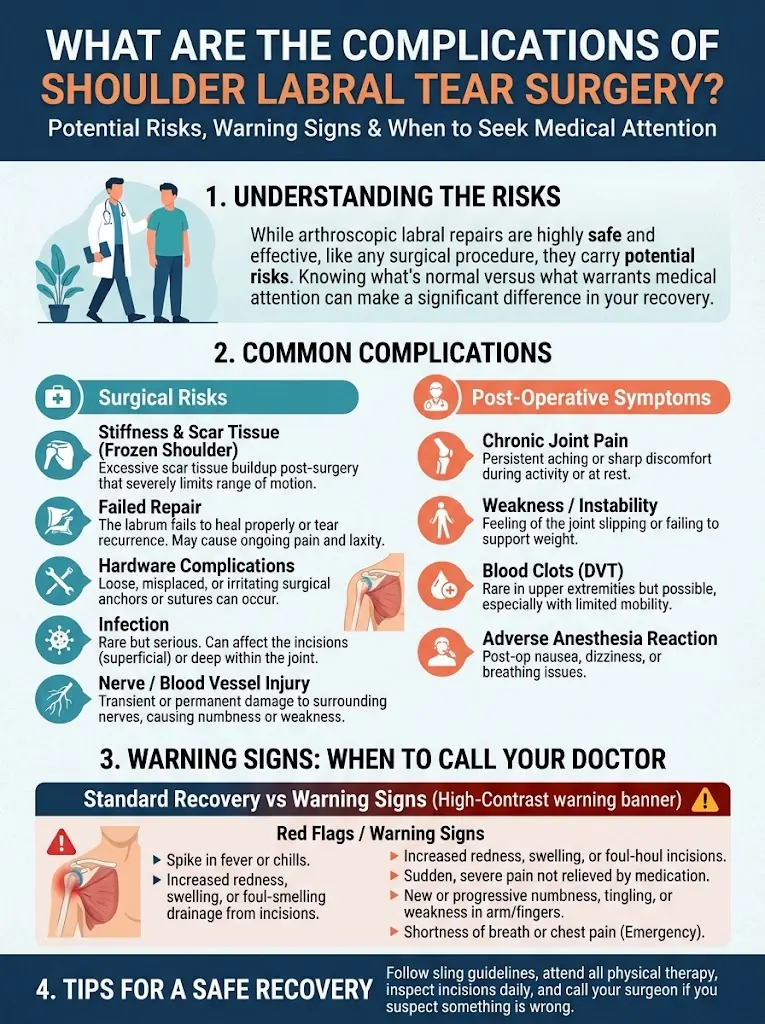
Shoulder labral tear surgery can help improve joint stability and reduce pain, but recovery may involve discomfort, stiffness, and temporary limits on everyday activities. Some people worry when pain persists, swelling appears, or shoulder movement feels different after the procedure. Knowing which symptoms can occur during healing and which may indicate a complication can help you respond appropriately.
Not every symptom after surgery means something has gone wrong. Mild soreness and temporary stiffness may be expected, while worsening pain, fever, wound changes, or new instability deserve closer attention. The timing, severity, and progression of symptoms are important.
This guide explains the possible complications of shoulder labral tear surgery, warning signs to watch for, how complications are evaluated, and when to contact your surgical team. Your surgeon’s instructions should take priority because recovery depends on the type of repair and your individual circumstances.
What Are the Possible Complications of Shoulder Labral Tear Surgery?
Complications range from temporary postoperative symptoms to less common problems that require additional treatment. They may occur soon after surgery or become apparent during rehabilitation.
| Complication | Possible signs | What to do |
|---|---|---|
| Pain and stiffness | Soreness or restricted movement | Follow your prescribed recovery plan and report worsening symptoms |
| Infection | Fever, spreading redness, warmth, drainage, increasing pain | Contact your surgical team urgently |
| Recurrent labral injury | Returning pain, catching, or instability | Arrange a clinical assessment |
| Nerve or blood vessel injury | New numbness, weakness, unusual hand color, or a cold hand | Seek prompt medical assessment; severe or sudden symptoms need emergency care |
| Persistent instability | Shoulder slipping, giving way, or partial dislocation | Contact your surgeon |
| Anesthesia or medication reaction | Nausea, itching, rash, or other unexpected symptoms | Report symptoms; breathing difficulty or facial swelling is an emergency |
These problems do not occur in every patient, and symptoms alone cannot confirm a complication. The original injury, surgical technique, other shoulder conditions, and rehabilitation all influence recovery.
Is Pain Normal After Shoulder Labral Surgery?
Some pain and swelling are common during early recovery, particularly after the effects of anesthesia wear off or prescribed pain relief changes. Discomfort should generally be managed according to your discharge instructions and monitored for changes.
Pain that becomes substantially worse, returns after improving, or prevents you from following your rehabilitation plan needs medical review. Persistent pain can have several causes, including stiffness, irritation, infection, or a structural problem. It does not automatically mean the repair has failed.
For context, how long shoulder labral tear surgery recovery takes depends on the repair performed and the progress of healing.
What Increases the Risk of Complications?
Risk varies by patient and procedure. Factors your surgeon may consider include:
- Smoking or nicotine use, which can interfere with tissue healing.
- Diabetes or other medical conditions that affect healing or infection risk.
- A previous shoulder operation or additional damage to joint structures.
- Not following sling, lifting, or movement restrictions.
- Returning to sports or heavy work before receiving clearance.
A complication is not necessarily caused by a mistake. Even when a procedure and recovery plan are appropriate, healing can be unpredictable. Follow your care team’s instructions and discuss individual risks before surgery. The different types of shoulder labral tears may also affect the procedure and rehabilitation plan.
Warning Signs: When Should You Seek Help?
Symptoms to monitor
Mild soreness, bruising, and gradually improving stiffness may occur after surgery. Follow your discharge instructions, take medications only as directed, and keep scheduled follow-up appointments.
Contact your surgical team promptly
Call your surgeon if you notice:
- Pain that is worsening rather than gradually improving.
- Increasing swelling, redness, warmth, or drainage around an incision.
- Fever or chills.
- New numbness, weakness, or persistent tingling.
- New shoulder slipping, catching with pain, or a sudden loss of function.
Seek emergency care
Get emergency help for trouble breathing, chest pain, fainting, sudden severe symptoms, facial or throat swelling, or a hand that becomes suddenly cold, pale, or blue. These symptoms may indicate a serious complication and should not wait for a routine appointment.
How Are Surgical Complications Diagnosed and Treated?
Your clinician will review when symptoms began, whether they are getting worse, and whether there was a new injury. The examination may assess the incision, circulation, sensation, shoulder movement, and stability.
Tests depend on the suspected problem. Blood tests or wound evaluation may be considered when infection is suspected, while imaging may help investigate persistent pain or possible structural damage. An MRI for a shoulder labral tear may be useful in selected cases, although postoperative findings require careful interpretation.
Treatment depends on the cause. Options may include adjusting pain management, treating an infection, modifying rehabilitation, or evaluating a possible recurrent tear. Revision surgery is not automatically necessary whenever symptoms persist.
How Can You Reduce the Risk of Problems During Recovery?
You cannot eliminate every surgical risk, but you can support safer recovery by following your prescribed plan.
- Wear your sling for the duration recommended by your surgeon.
- Avoid lifting, pushing, pulling, and overhead movement until cleared.
- Attend follow-up visits and complete rehabilitation as directed.
- Keep the incision clean and follow wound-care instructions.
- Tell your care team about new symptoms instead of trying to push through them.
Do not add exercises or change movement restrictions without guidance. If you are unsure whether a symptom is expected, contact your surgical team rather than waiting for it to become severe.
Frequently Asked Questions
1. How common are complications after shoulder labral surgery?
The risk varies according to the procedure, health factors, and the type of injury. Your surgeon can explain the complications most relevant to your operation rather than relying on a general estimate.
2. How do I know if my shoulder incision is infected?
Increasing redness, warmth, swelling, drainage, worsening pain, or fever may indicate infection. Contact your surgical team promptly if these develop.
3. Can shoulder labral surgery cause nerve damage?
Nerve injury is a possible complication, although not every episode of tingling indicates permanent damage. Report new or persistent numbness or weakness, and seek urgent care for sudden or severe changes.
4. Is stiffness normal after labral repair?
Some stiffness can occur while the shoulder heals and movement is restricted. Severe or persistent stiffness should be discussed with your surgeon before attempting more aggressive stretching.
5. Can the labrum tear again after surgery?
Yes, a repaired labrum can be injured again, particularly after another traumatic event or excessive loading during recovery. New pain or instability warrants an assessment.
6. Can I prevent infection after surgery?
Follow wound-care instructions, wash your hands before handling dressings, and take prescribed medications as directed. Do not apply unapproved products to the incision.
7. When can I return to exercise?
The timeline depends on the repair and your progress. Resume strengthening, lifting, and sports only according to your surgeon’s and physical therapist’s guidance.
8. Does persistent pain mean I need another operation?
No. Pain can result from several issues, and some may improve with adjusted rehabilitation or other treatment. Further surgery is considered only after appropriate evaluation.
9. Should I be worried about clicking after surgery?
Occasional painless clicking may not indicate a serious problem. Painful catching, new instability, or clicking accompanied by worsening function should be assessed.
10. When should I call my surgeon instead of waiting for a follow-up?
Contact your surgical team promptly for worsening pain, wound changes, fever, new weakness, or instability. Seek emergency care for breathing difficulty, chest pain, facial or throat swelling, or sudden severe circulation changes.
Conclusion
Shoulder labral tear surgery can involve temporary discomfort and, less commonly, complications such as infection, stiffness, nerve injury, or recurrent instability. Monitor how symptoms change, follow your recovery instructions, and seek prompt assessment for warning signs. Early communication with your surgical team helps determine whether symptoms reflect expected healing or need further treatment.
Disclaimer: This article is provided for educational and informational purposes only.
This article is for education purpose only and is not a diagnosis or a substitute for medical advice.