
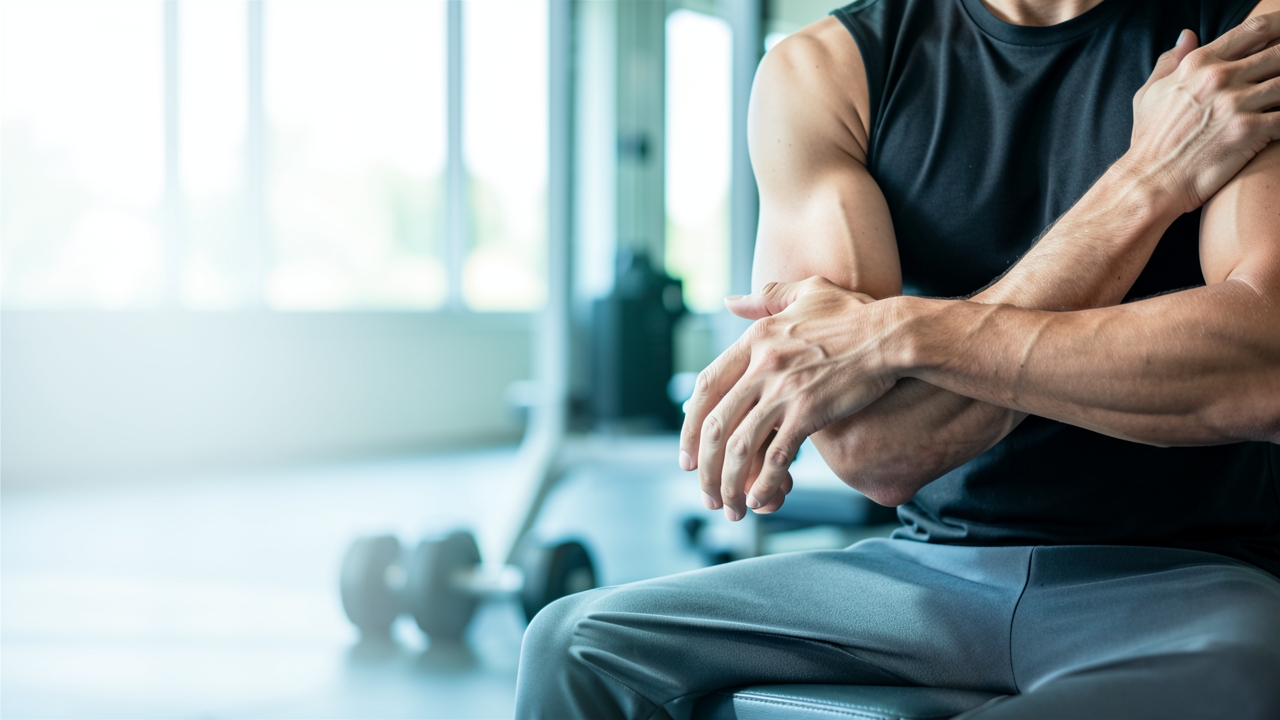
Weight training repeatedly loads the muscles and connective tissues around the elbow. A new exercise, a sudden increase in weight, frequent gripping, or too little recovery can make the area sore. Pain is a reason to reassess the movement, not to force another set.
What Can Cause Elbow Pain After Lifting Weights?
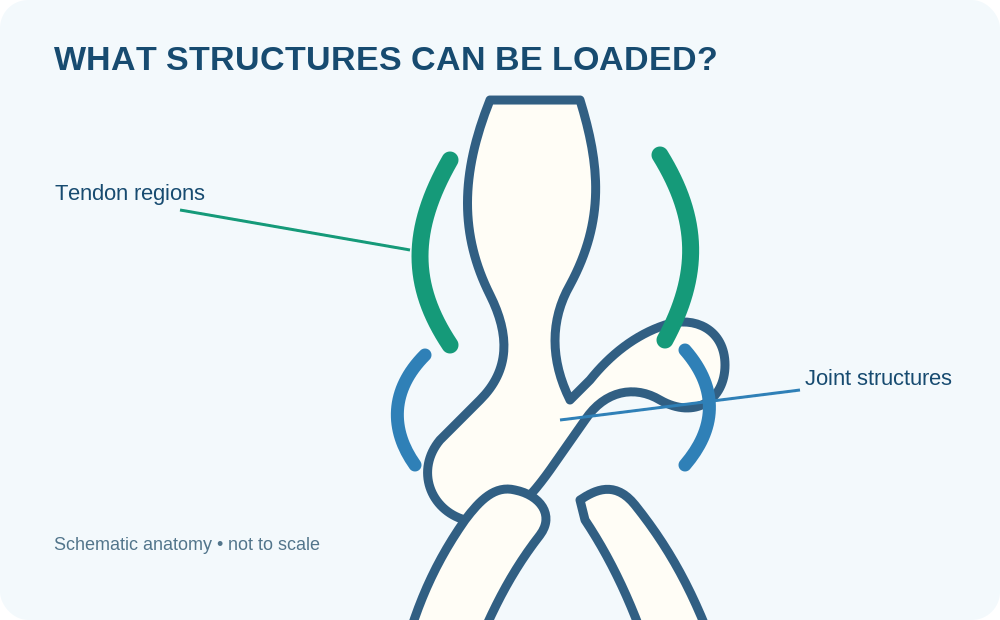
The elbow connects the upper arm to the forearm. Tendons attach muscles to bone, while ligaments help stabilize the joint. Lifting can irritate these structures, and the location of discomfort may offer useful clues.
- Outer-elbow tendon overload: Repeated gripping and wrist extension can irritate the wrist extensor tendons, a pattern commonly called tennis elbow.
- Inner-elbow tendon overload: The flexor-pronator muscles help grip and turn the forearm. Repeated wrist flexion or forceful gripping may irritate their attachment, often called golfer's elbow.
- Biceps or triceps tendon injury: The biceps bends the elbow and rotates the palm upward; the triceps straightens it. Heavy curls, pulling, pressing, or sudden loading can strain these tendons.
- Ligament injury: An awkward lift or repeated high-load throwing can stress elbow ligaments. Learn about an elbow ligament tear and UCL injury.
- Joint or nerve problems: Bursitis, arthritis, fracture, dislocation, or nerve compression can also cause pain. Do not assume every painful elbow is tendonitis.
Which Weightlifting Movements Can Trigger Elbow Pain?
The exercise can provide a clue, but it cannot diagnose the injury. Curls load the biceps and forearm muscles. Rows and pull-ups involve sustained gripping. Bench presses, push-ups, and triceps extensions load the structures that straighten and stabilize the elbow.
- Outer-elbow pain during gripping, rows, or curls may involve the wrist extensor tendons.
- Inner-elbow pain during forceful gripping or wrist flexion may involve the flexor-pronator tendons.
- Front-elbow pain during curls or palm-up rotation may involve the biceps tendon.
- Back-of-elbow pain during pressing or extension may involve the triceps tendon or nearby tissues.
If your main symptom is pain when straightening the arm, see this guide to elbow pain when straightening your arm.
How Can You Tell Workout Soreness From a More Serious Injury?
Ordinary muscle soreness often follows unfamiliar or demanding exercise and is felt in the muscle itself. It generally improves over the following days. Pain that is sharply localized at the joint, worsens with a specific movement, or repeatedly returns during training deserves more attention.
A sudden pop, immediate pain, bruising, visible change in arm shape, or new weakness can indicate a tendon or ligament injury. Do not test a suspected injury by attempting another heavy lift.
Seek prompt medical assessment for major swelling, extensive bruising, deformity, inability to move the arm, new weakness or numbness, or a hot red elbow with fever. After significant trauma, a fracture or dislocation may need urgent evaluation. Learn how clinicians distinguish a fracture from a break, and why an elbow dislocation should not be put back into place at home.
What Should You Do When Your Elbow Hurts After a Workout?
For mild pain without a major injury, reduce the activity that reproduces it. Temporarily remove the painful lift, lower the load, or use a comfortable range of motion. Avoid repeatedly checking the pain with heavy weights. Relative rest means reducing the aggravating demand while keeping comfortable movement when safe.
A wrapped cold pack may provide short-term comfort after a recent flare. Keep it off bare skin. Gentle movement can help prevent stiffness, but do not force a stretch or exercise through sharp pain. For general movement ideas, see elbow pain exercises and recovery; exercises should match the cause and stage of the problem.
Do not use pain medicine simply to mask symptoms so you can continue a heavy session. Over-the-counter medicines are not suitable for everyone, so ask a healthcare professional or pharmacist if you have medical conditions or take other medicines.
How Can You Return to Lifting More Safely?
Return gradually when everyday movement is comfortable and symptoms are improving. Start with a lighter load and fewer repetitions than usual. Increase one training variable at a time and monitor how the elbow feels during exercise and afterward.
- Warm up with easy movement and lighter sets before heavier work. See the difference between warming up and stretching.
- Keep the wrist in a comfortable, controlled position rather than letting it collapse under the bar.
- Use a load that allows smooth repetitions without jerking, swinging, or forcing a painful range.
- Allow recovery between demanding sessions; avoid rapidly increasing weight, volume, and frequency together.
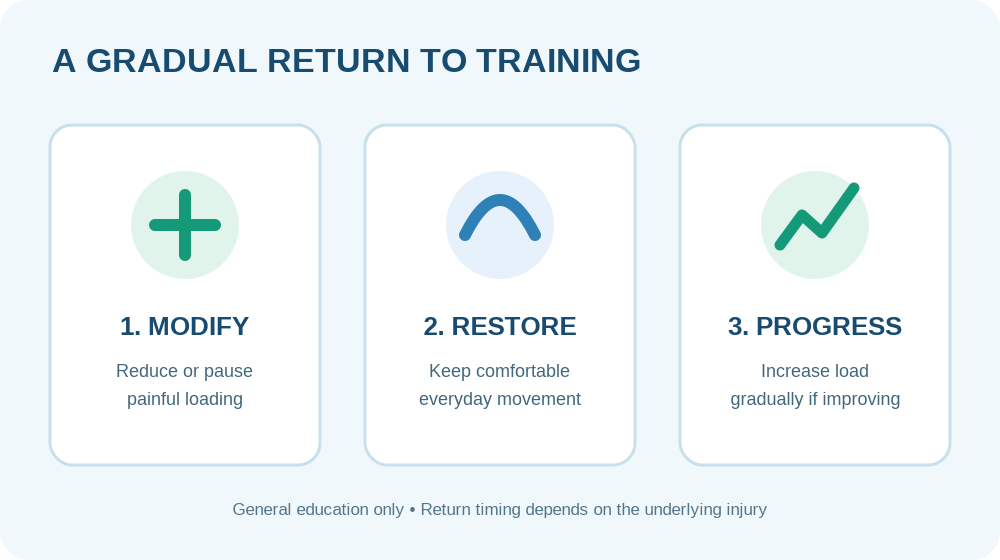
If pain keeps returning, a physical therapist can assess strength, range of motion, grip, and training demands. Persistent symptoms should not be treated like a one-day flare; learn about acute versus chronic pain.
How Is the Cause of Elbow Pain Diagnosed?
A healthcare professional may ask which exercises trigger pain, how quickly it began, whether there was a pop or impact, and whether you have weakness, tingling, or swelling. They may examine the elbow, forearm, wrist, and shoulder and test movement and strength.
Imaging is not needed for every case. X-rays may be considered after trauma or when a bone or joint problem is suspected. Ultrasound or MRI may help assess a tendon or ligament when the examination suggests a significant injury.
Recovery depends on the diagnosis. A mild muscle strain differs from persistent tendon pain or a torn ligament. For background, read about how long a pulled muscle may take to heal; a general timeline cannot predict an unassessed elbow injury.
When Should You Seek Medical Care for Elbow Pain?
Arrange an appointment if pain does not improve after reducing the aggravating activity, keeps returning when you resume training, interferes with daily tasks, or comes with tingling, weakness, or reduced movement.
Seek urgent care after a sudden injury with a pop, major bruising or swelling, visible deformity, severe pain, or inability to move the arm. A hot, red elbow with fever may indicate infection. A cold, pale, numb, or markedly weak hand after injury needs emergency assessment.
What Questions Do People Ask About Elbow Pain After Lifting Weights?
Can lifting weights cause elbow tendonitis?
Yes. Repeated gripping, curls, rows, and wrist movements can overload the tendons around the elbow. Pain location and the movements that trigger it help guide an assessment.
Why does the inside of my elbow hurt after lifting?
The inner elbow may be affected by flexor-pronator tendon overload or an ulnar collateral ligament injury. Repeated gripping and wrist flexion can contribute.
Why does the outside of my elbow hurt when I lift?
Outer-elbow pain can involve the wrist extensor tendons, often called tennis elbow. Gripping and lifting with the palm facing down may aggravate it.
Why does the front of my elbow hurt during biceps curls?
The biceps tendon helps bend the elbow and rotate the forearm. A sudden pop, bruising, or new weakness needs prompt medical assessment.
Should I stop lifting weights if my elbow hurts?
Stop or modify the movement that causes sharp or increasing pain. You may train other areas only if doing so does not aggravate the elbow.
Is ice or heat better for elbow pain after a workout?
A wrapped cold pack may help short-term comfort after a recent flare. Heat may feel better for stiffness, but neither treatment diagnoses the cause.
How long does elbow pain from weightlifting take to heal?
Recovery depends on the cause and severity. Mild overload may settle after activity changes, while tendon or ligament injuries may need longer rehabilitation.
Can I train through mild elbow pain?
Do not push through sharp or worsening pain. Reduce the load or stop the movement if symptoms increase during exercise or remain worse afterward.
When should I see a doctor for elbow pain after lifting?
Seek assessment for persistent pain, weakness, tingling, or reduced movement. Sudden bruising, deformity, major swelling, fever, or inability to move needs urgent care.
Can changing my grip prevent elbow pain when lifting?
A comfortable grip and neutral wrist position may reduce strain for some exercises. Persistent pain still needs assessment rather than relying on technique changes alone.
What Should You Remember About Elbow Pain After Lifting Weights?
Elbow pain after weightlifting can involve tendons, muscles, ligaments, nerves, or the joint itself. Location and timing offer clues but cannot confirm a diagnosis. Reduce aggravating movements, return to loading gradually when safe, and seek care for persistent symptoms or warning signs.
Medical disclaimer: This article is for general educational purposes only. It is not a diagnosis or a substitute for professional medical advice, diagnosis, or treatment. Consult a qualified healthcare professional about symptoms or treatment decisions.
This article is for education purpose only and is not a diagnosis or a substitute for medical advice.