
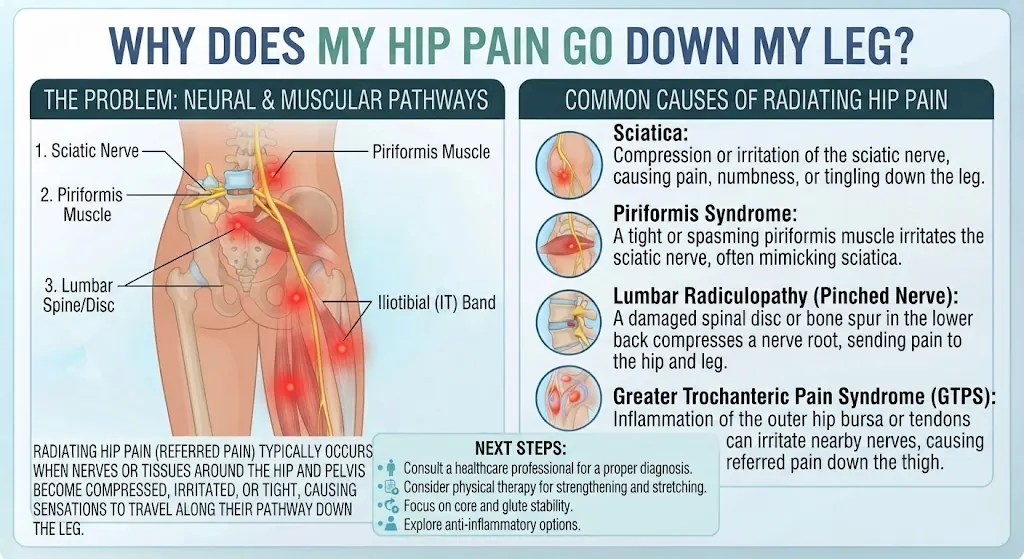
Pain that spreads down the leg does not always mean the hip joint itself is damaged. Nerves in the lower back, irritated muscles, tendons, and hip joint conditions can cause similar symptoms, so the location and pattern of pain matter.
Understanding why hip pain goes down your leg can help you recognize possible causes, choose safer steps for relief, and know when to seek medical care. The pattern alone cannot confirm a diagnosis, but associated symptoms can help guide the next step.
What Causes Hip Pain That Radiates Down the Leg?
The most common explanations include nerve irritation in the lower back, problems around the hip joint, and irritation of the muscles or tendons surrounding the hip. The pain may stay in the upper thigh or travel farther toward the foot, depending on its source.
1. Sciatica or a Pinched Nerve
Sciatica occurs when a nerve root in the lower back becomes irritated or compressed. It can cause shooting, burning, tingling, or electric-like pain from the buttock down the back of one leg. Numbness or weakness may occur as well.
A herniated disc or narrowing around the spinal nerves can contribute. Explore the common sciatica symptoms, causes, and treatment options to understand how nerve-related pain differs from pain originating in the hip.
2. Hip Osteoarthritis
Osteoarthritis involves changes in the cartilage and other structures within a joint. Hip arthritis commonly causes pain in the groin, front of the thigh, or buttock, along with stiffness after rest and discomfort during walking. Pain extending below the knee is less typical and may suggest another cause.
3. Greater Trochanteric Pain Syndrome
Pain on the outside of the hip can come from irritation of the gluteal tendons and nearby tissues. It often feels worse when lying on the affected side, climbing stairs, or standing on one leg. The discomfort may spread down the outer thigh but does not usually cause foot tingling or neurological weakness.
4. Muscle or Tendon Strain
A strain involving the hip flexors, gluteal muscles, or hamstrings may cause localized pain that spreads into the thigh. It may follow exercise, lifting, sudden movement, or an increase in activity. Pain often worsens when the affected muscle contracts or stretches.
5. Lumbar Spinal Stenosis
Spinal stenosis means the spaces around spinal nerves have narrowed. Some people experience aching, heaviness, numbness, or weakness in the buttocks and legs while standing or walking. Symptoms may ease when sitting or leaning forward.
How Can You Tell Where the Pain May Be Coming From?
No single symptom reliably identifies the cause, but these patterns can help you describe the problem to a clinician.
| Pain pattern | Possible explanation | Clues to notice |
|---|---|---|
| Buttock pain traveling down the back of the leg | Sciatica or nerve-root irritation | Burning, tingling, numbness |
| Pain in the groin or front of the thigh | Hip joint irritation or arthritis | Stiffness, painful hip movement |
| Pain over the outer hip and thigh | Gluteal tendon irritation | Worse when lying on that side |
| Pain after exercise or sudden movement | Muscle or tendon strain | Tenderness and pain with muscle use |
| Leg discomfort while standing or walking | Possible spinal stenosis | May improve when sitting or leaning forward |
Pain location is only one part of an assessment. For example, hip pain in the groin may be related to the hip joint, while symptoms that extend into the foot with tingling may warrant a closer look at the nerves.
What Can You Do at Home to Relieve Hip and Leg Pain?
Home care may help mild symptoms, but the safest approach depends on the cause. Avoid pushing through sharp, spreading, or worsening pain.
-
Keep moving gently. Short, comfortable walks may help prevent stiffness. Reduce distance or duration if walking increases symptoms.
-
Change positions regularly. If sitting aggravates your pain, stand up and move gently every 30–60 minutes as tolerated.
-
Try heat or cold. Apply a wrapped cold pack for 15–20 minutes after a recent strain or when the area feels irritated. Gentle heat may help stiffness. Protect your skin and stop if symptoms worsen.
-
Adjust sleeping positions. Try lying on the less painful side with a pillow between your knees, or on your back with a pillow beneath your knees. Avoid positions that increase leg pain.
-
Choose gentle activity. Low-impact movement may help maintain mobility. See these low-impact exercises for people with joint pain, but stop any movement that causes new numbness, weakness, or sharper pain.
Nonprescription pain relievers may be unsuitable for people with kidney disease, stomach ulcers, certain heart conditions, pregnancy, or medications that increase bleeding risk. Ask a pharmacist or clinician if you are unsure what is safe for you.
How Long Does Radiating Hip Pain Last?
Recovery depends on the underlying cause, symptom severity, and whether a nerve is involved. Mild muscle strains may improve over days to several weeks, while nerve irritation or arthritis-related symptoms can last longer or recur.
| Possible cause | General course | When to arrange evaluation |
|---|---|---|
| Mild muscle strain | Often improves over days to weeks | If pain worsens or fails to improve |
| Sciatica or nerve irritation | May improve over several weeks, but varies | If persistent, recurring, or limiting activity |
| Hip osteoarthritis | Often fluctuates over time | If stiffness or pain interferes with daily life |
| Spinal stenosis | May be persistent or gradually progressive | If walking becomes increasingly difficult |
These are broad patterns, not guarantees or a way to diagnose yourself. A clinician may examine hip movement, muscle strength, sensation, reflexes, and your lower back. Imaging is not always necessary initially; it depends on examination findings, injury history, and warning signs.
When Should You Seek Medical Care?
Seek emergency care now if hip or leg pain occurs with any of the following:
-
New difficulty controlling your bladder or bowels.
-
Numbness around the groin or inner thighs.
-
Rapidly worsening leg weakness, particularly in both legs.
-
Severe pain after a major fall or accident, especially if you cannot bear weight.
Get urgent medical assessment for a hot, swollen hip with fever, sudden severe pain, inability to walk, or new weakness or numbness that is progressing. These symptoms can indicate conditions that need prompt treatment.
Arrange a routine appointment if the pain keeps returning, disrupts sleep, travels below the knee, or does not improve with sensible activity adjustments. Seek evaluation sooner if you have a history of cancer, unexplained weight loss, or significant immune suppression.
Frequently Asked Questions
1. Can hip pain that travels down my leg come from my back?
Yes. Irritation or compression of nerves in the lower spine can cause pain that starts around the buttock or hip and travels down the leg. Tingling, numbness, or weakness makes nerve involvement more concerning.
2. Does sciatica always reach the foot?
No. Sciatica may cause pain only in the buttock or thigh, or it may extend to the calf and foot. The distribution varies depending on which nerve roots are irritated.
3. Why does my hip hurt when I walk and spread into my thigh?
Hip joint conditions, tendon problems, and spinal nerve irritation can all cause pain during walking. The exact location, associated stiffness, and presence of tingling or weakness help determine what needs assessment.
4. Can a herniated disc cause hip pain?
Yes. A herniated disc can irritate a spinal nerve and cause pain felt in the buttock, hip region, or leg. Back pain may be present, but it is not always prominent.
5. Should I stretch when hip pain travels down my leg?
Gentle movement may help, but aggressive stretching can aggravate some nerve or tendon conditions. Stop if a stretch increases radiating pain, numbness, or tingling, and ask a clinician or physical therapist for individualized guidance.
6. Is walking good for radiating hip pain?
Comfortable walking can help maintain mobility for some people. If it increases pain, causes weakness, or makes numbness worse, reduce the activity and seek advice rather than forcing yourself to continue.
7. Can sleeping position cause hip and leg pain?
Sleeping directly on a sensitive outer hip can aggravate local tendon pain. A pillow between the knees or beneath the knees when lying on your back may reduce pressure, although it will not treat every cause.
8. Does pain below the knee mean it is sciatica?
Not necessarily. Nerve irritation is one possibility, but other conditions can also cause lower-leg pain. An examination is needed to distinguish among potential causes.
9. When might I need an MRI?
An MRI may be considered when symptoms suggest significant nerve compression, when neurological problems are progressing, or when persistent symptoms could change treatment decisions. Many people do not need immediate imaging.
10. Can hip pain that radiates down the leg go away on its own?
Some mild strains and episodes of nerve irritation improve over time. Persistent, worsening, or recurring pain deserves medical assessment, particularly if it affects walking, sleep, strength, or sensation.
The Bottom Line
Hip pain that travels down your leg can come from the hip joint, surrounding soft tissues, or nerves in the lower back. Notice where the pain travels, what triggers it, and whether numbness or weakness occurs. Use gentle, symptom-limited movement and seek medical care for persistent symptoms or warning signs.
Disclaimer: This article is provided for educational and informational purposes only.
This article is for education purpose only and is not a diagnosis or a substitute for medical advice.