
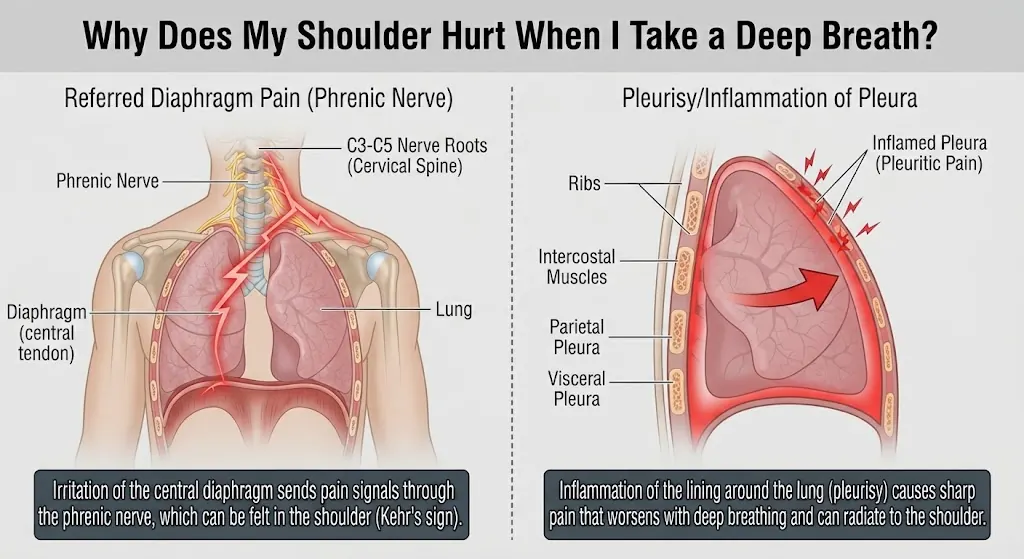
Sometimes, this discomfort comes from a strained chest or shoulder muscle. However, pain that worsens with breathing can also originate in the lungs, the lining around the lungs, or other structures in the chest. Do not assume that pain with a deep breath is only a muscle problem, especially if it starts suddenly or comes with shortness of breath.
Understanding why your shoulder hurts when you take a deep breath means considering where the pain is located, what triggers it, and whether other symptoms are present. These clues can help you decide what to do next and when to seek medical care.
What Causes Shoulder Pain When Taking a Deep Breath?
Several conditions can cause shoulder or shoulder blade pain during deep breathing. The movement of the ribs and chest can aggravate nearby muscles, while irritation inside the chest may cause pain that feels as though it comes from the shoulder.
| Possible cause | Symptoms that may occur |
|---|---|
| Muscle strain | Tenderness, pain with twisting or arm movement |
| Rib or chest wall irritation | Localized pain that worsens with deep breathing, coughing, or pressing the area |
| Pleurisy | Sharp pain with breathing or coughing |
| Pneumonia or another lung infection | Pain with breathing, cough, fever, or fatigue |
| Pulmonary embolism (blood clot in the lung) | Sudden breathing-related chest or shoulder-area pain, shortness of breath, sometimes coughing blood |
| Referred pain from abdominal organs | Pain near the shoulder, sometimes with upper abdominal discomfort or nausea |
These symptoms overlap, so a table cannot determine the cause. The timing, severity, associated symptoms, and medical history all matter.
1. Muscle strain or chest wall pain
Overuse, heavy lifting, forceful coughing, or an awkward movement can strain muscles around the shoulder, ribs, or upper back. Deep breathing expands the rib cage, which can stretch irritated tissues and trigger pain.
Pain that changes when you twist, move your arm, or press a tender spot may be musculoskeletal, but these clues do not rule out a more serious cause. Learn about pain between the shoulder blades and shoulder tendonitis symptoms and treatment.
2. Pleurisy or a lung infection
Pleurisy occurs when the tissue surrounding the lungs becomes inflamed. It can cause sharp pain during inhalation or coughing, sometimes felt near the shoulder or back. Infections such as pneumonia may also cause breathing-related pain, particularly when accompanied by fever, cough, or feeling unwell.
These conditions need medical assessment rather than treatment as a simple shoulder strain.
3. A blood clot or another serious chest condition
A pulmonary embolism is a blood clot in the lungs that can be life-threatening. Symptoms may include sudden shortness of breath, pain that worsens with breathing, a rapid heartbeat, dizziness, or coughing up blood. Risk can be higher after surgery, prolonged immobility, or a previous blood clot, although it can occur without obvious risk factors.
Shoulder-area pain can also occur with heart-related conditions. Review when shoulder pain may be a sign of a heart problem, but do not rely on a symptom checklist to rule out an emergency.
4. Pain referred from another area
The diaphragm and some organs in the upper abdomen share nerve pathways with areas around the shoulder. Irritation in these structures can sometimes be felt as shoulder pain rather than pain directly at the source.
This is one reason pain location alone cannot reliably identify the cause.
What Can Make the Pain Worse?
Pay attention to whether pain is triggered by breathing alone or also by movement.
-
Deep breathing or coughing: May occur with chest wall irritation or conditions affecting the lungs and surrounding tissues.
-
Lifting or rotating the arm: May point toward a shoulder or muscle problem.
-
Twisting or bending: Can aggravate some chest wall and upper-back conditions.
-
Lying down or exertion: The significance depends on the pattern and any accompanying symptoms.
Pain that occurs with both movement and breathing can still require evaluation. Do not repeatedly take deep breaths or press hard on the painful area to test it.
How Can You Relieve Shoulder Pain When Breathing Deeply?
If the discomfort is mild, clearly follows a minor strain, and you have no warning signs, consider temporarily avoiding heavy lifting and movements that worsen the pain. Rest in a comfortable position, and try a wrapped cold pack for 15–20 minutes if the area seems recently strained.
Avoid forceful stretching, strenuous workouts, or tight chest binding. Over-the-counter pain medication may not be safe for everyone, so check with a clinician or pharmacist if you have other medical conditions, take other medicines, or are pregnant.
If the cause is unclear, the pain persists, or breathing itself is painful, arrange medical assessment instead of relying on home remedies. A clinician may check your breathing, oxygen level, chest, shoulder, and medical history and decide whether tests are needed.
When Should You Seek Medical Care?
| Urgency | Warning signs | What to do |
|---|---|---|
| Emergency | Severe or sudden shortness of breath, chest pressure, fainting, blue or gray lips, coughing blood, or sudden breathing-related pain with possible clot symptoms | Call emergency services immediately |
| Prompt assessment | Fever with breathing-related pain, persistent sharp pain, new cough, or worsening symptoms | Seek same-day or prompt medical care |
| Monitor cautiously | Mild pain after a clear minor strain that improves and has no breathing difficulty or other warning signs | Reduce aggravating activity and seek care if it persists or worsens |
Do not drive yourself if you have severe breathing difficulty, faintness, or symptoms suggesting a heart attack or blood clot.
Frequently Asked Questions
1. Can a pulled muscle hurt when I take a deep breath?
Yes. Muscles between the ribs and around the shoulder blade move during breathing, so a strain may hurt when you inhale deeply. However, similar pain can occur with chest or lung conditions.
2. Why does my shoulder blade hurt when I breathe in?
The pain may come from strained muscles, irritated ribs, or structures inside the chest. Sudden or persistent pain, especially with breathing difficulty, needs prompt assessment.
3. Is shoulder pain when breathing a sign of pneumonia?
It can occur with pneumonia, particularly alongside fever, cough, fatigue, or shortness of breath. A clinician must assess the symptoms to determine the cause.
4. Can anxiety cause shoulder pain during deep breathing?
Anxiety can contribute to muscle tension and changes in breathing patterns. However, new or unexplained pain with inhalation should not automatically be attributed to anxiety.
5. Should I exercise with shoulder pain when taking a deep breath?
Avoid strenuous exercise until the cause is clearer, particularly if breathing triggers the pain. Seek medical advice before resuming workouts if symptoms persist or worsen.
6. When should I worry about pain with a deep breath?
Take it seriously if it begins suddenly, becomes severe, or occurs with shortness of breath, chest pressure, faintness, fever, or coughing blood. Emergency symptoms require immediate care.
Conclusion
Shoulder pain when taking a deep breath may come from muscle strain, chest wall irritation, or a condition affecting the lungs or chest. Because some causes are serious, consider accompanying symptoms and how suddenly the pain began. Seek emergency care for breathing difficulty, chest pressure, fainting, or other major warning signs, and arrange medical assessment for persistent or unexplained pain.
Disclaimer: This article is provided for educational and informational purposes only.
This article is for education purpose only and is not a diagnosis or a substitute for medical advice.