

Shoulder pain that becomes worse at night can make it hard to fall asleep, wake you repeatedly, or leave you with a stiff, aching shoulder in the morning. You may notice it most when you lie on one side, reach overhead, or keep your arm in one position for a long time. If you are searching why does my shoulder hurt at night, the pattern of pain and the movements or positions that trigger it can provide useful clues.
Nighttime shoulder pain does not automatically mean you have a serious injury. Common causes include rotator cuff problems, bursitis, tendon irritation, frozen shoulder, impingement, arthritis, and sometimes pain referred from the neck. However, severe or unexplained pain—especially when accompanied by chest symptoms, major weakness, or an injury—should not simply be attributed to sleeping position.
This guide explains the most common reasons shoulder pain gets worse at night, how sleeping position can contribute, what you can safely try at home, when imaging or medical evaluation may be appropriate, and which warning signs require prompt attention.
Why Does Shoulder Pain Get Worse at Night?
Shoulder pain can become more noticeable at night because the joint and surrounding tissues remain in one position for an extended period. Lying directly on the painful shoulder can also place sustained pressure on irritated tissues.
Your sleeping position may contribute without being the original cause of the problem. For example, someone with an irritated rotator cuff may tolerate normal daytime activity reasonably well but experience considerably more pain after several hours lying on that shoulder.
Nighttime can also make pain feel more prominent because there are fewer activities competing for your attention. This does not mean the pain is imaginary; rather, prolonged positioning and increased awareness can make an existing shoulder problem more noticeable.
If you are unsure what type of shoulder problem could be responsible, understanding the types of shoulder pain and their causes can help you recognize the different patterns clinicians consider.
What Are the Most Common Causes of Shoulder Pain at Night?
Several shoulder conditions can produce nighttime pain. Symptoms often overlap, so pain location alone cannot reliably identify the underlying problem.
| Possible cause | Common symptoms | Why it may hurt at night |
|---|---|---|
| Rotator cuff problem | Pain with lifting, reaching, or rotating the arm; possible weakness | Lying on the shoulder can compress irritated tissues |
| Tendonitis | Aching or pain with repetitive shoulder movement | Prolonged positioning may aggravate an irritated tendon |
| Bursitis | Aching, tenderness, pain with pressure or movement | Sleeping directly on the shoulder increases pressure |
| Frozen shoulder | Pain plus progressively restricted movement | Certain sleeping positions can stretch painful tissues |
| Impingement | Pain during overhead movement or certain arm positions | Some positions can increase compression around the shoulder |
| Arthritis | Deep aching, stiffness, reduced range of motion | Inactivity overnight may increase stiffness |
| Neck-related nerve irritation | Pain extending into the shoulder or arm, sometimes with tingling | Neck position during sleep can aggravate nerve-related symptoms |
Rotator Cuff Problems
Rotator cuff disorders are an important cause of shoulder pain that becomes troublesome at night. Pain may occur when lifting your arm, reaching behind you, putting on a shirt, or lying on the affected side.
If the problem involves a significant tear, weakness may be more prominent than pain alone. You can learn more about rotator cuff tear symptoms, treatment, and recovery patterns if weakness or an injury is part of your symptoms.
Nighttime pain can occur with both tendon irritation and tears, so pain at night by itself does not establish that a tear is present.
Shoulder Tendonitis
Shoulder tendonitis involves irritation of a tendon around the shoulder. Repetitive overhead activity, sports, lifting, or other movements can contribute.
Typical symptoms include pain with specific movements and tenderness around the shoulder. Reviewing shoulder tendonitis symptoms can help distinguish tendon-related symptoms from other possible sources of shoulder pain.
Shoulder Bursitis
A bursa is a small fluid-filled structure that helps reduce friction between tissues. Irritation of a shoulder bursa can cause aching and tenderness, particularly when pressure is applied to the area.
If your shoulder becomes especially painful when you lie directly on it, shoulder bursitis symptoms may be relevant to the pattern you are experiencing.
Frozen Shoulder
Frozen shoulder, or adhesive capsulitis, typically causes both pain and progressive stiffness. You may have difficulty lifting your arm, reaching behind your back, or rotating the shoulder.
Night pain can be particularly disruptive during painful stages of frozen shoulder. Recognizing the early signs of frozen shoulder is useful because restricted movement is an important part of the condition.

Shoulder Impingement
Shoulder impingement describes a pattern in which structures around the shoulder become painful during certain movements or positions. Overhead activity may reproduce symptoms.
Because impingement and frozen shoulder can produce overlapping complaints, understanding the differences between frozen shoulder and impingement can be useful when stiffness and nighttime pain occur together.
People with impingement may also experience shoulder impingement symptoms such as pain during specific arm movements.
Can Sleeping Position Cause Shoulder Pain?
Yes. Sleeping position can aggravate an existing shoulder problem and, in some cases, contribute to symptoms through prolonged pressure or an awkward position.
Side sleeping directly on the painful shoulder is an obvious source of compression. Keeping the arm overhead or allowing it to fall into an uncomfortable position can also aggravate symptoms in some people.
However, changing your sleeping position may reduce symptoms without addressing the underlying cause. If pain keeps returning despite avoiding pressure on the shoulder, the problem may require further evaluation.
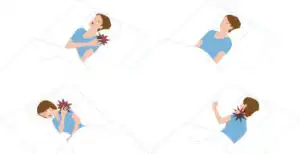
Which Sleeping Positions May Help?
There is no universally correct sleeping position. The goal is to find a position that minimizes pressure and does not force the shoulder into a painful range.
| Sleeping position | Potential advantage | Practical adjustment |
|---|---|---|
| Opposite side | Avoids direct pressure | Support the painful arm with a pillow |
| Back | Reduces pressure on either shoulder | Place a pillow beneath the forearm if helpful |
| Painful side | Usually increases pressure | Avoid if it clearly worsens symptoms |
| Arm overhead | May aggravate some shoulder conditions | Keep the arm in a comfortable supported position |
If you sleep on your side, hugging a pillow against your chest can give the painful arm somewhere to rest. If you sleep on your back, placing a pillow under the forearm can prevent the arm from falling into an uncomfortable position.
How Can I Relieve Shoulder Pain at Night?
Start by reducing the positions and activities that clearly aggravate your symptoms rather than repeatedly testing the painful movement.
Useful measures may include:
- Avoid sleeping directly on the painful shoulder.
- Support the affected arm with a pillow.
- Try sleeping on your back or the opposite side.
- Reduce activities that repeatedly provoke pain.
- Maintain gentle, comfortable shoulder movement during the day.
- Avoid forcing stretches or exercises that sharply increase pain.
- Consider heat or cold if either provides temporary comfort.
For practical home-care strategies, see these shoulder pain home remedies and use only approaches that are appropriate for your situation.
Medication may also provide short-term symptom relief for some people, but the safest choice depends on factors such as your medical history, other medications, allergies, pregnancy status, kidney or stomach problems, and the suspected cause of the pain.
Should You Exercise With Shoulder Pain at Night?
Not necessarily. Whether exercise is appropriate depends on the underlying problem and how the shoulder responds to movement.
Gentle movement can help prevent unnecessary stiffness, but repeatedly performing painful overhead exercises may aggravate some shoulder conditions. If symptoms are mild and movement does not substantially increase pain, a clinician or physical therapist may recommend a progressive exercise program.
For general guidance, see exercises for shoulder pain rather than assuming every shoulder exercise is appropriate for every condition.
If your shoulder pain began after exercise, reviewing how to prevent shoulder injuries during workouts can also help identify training behaviors that may contribute to recurrent symptoms.
Could Neck Problems Cause Shoulder Pain at Night?
Yes. Not every symptom felt around the shoulder originates inside the shoulder joint.
Irritation of nerves in the neck can cause pain that travels into the shoulder, shoulder blade, or arm. Neck position during sleep may sometimes influence these symptoms.
If you experience neck pain radiating to the shoulder, especially together with tingling, numbness, or arm weakness, the neck may need to be evaluated rather than focusing exclusively on the shoulder.
A compressed nerve in the cervical spine can also produce cervical radiculopathy symptoms, including pain, numbness, tingling, or weakness extending away from the neck.
Similarly, symptoms associated with a pinched nerve in the neck can sometimes be mistaken for a primary shoulder problem.
Pain concentrated around the upper back or shoulder blades can have several causes. Persistent pain between the shoulder blades deserves evaluation if it does not improve or is accompanied by neurological or other concerning symptoms.
Does the Type of Pain Matter?
Yes. The quality and location of pain can provide useful information, although they cannot diagnose the underlying condition by themselves.
| Pain pattern | Possible considerations |
|---|---|
| Aching pain when lying on the shoulder | Bursitis, rotator cuff irritation, other shoulder conditions |
| Pain with overhead reaching | Rotator cuff disorder, tendon irritation, impingement |
| Deep joint pain and stiffness | Arthritis or other joint-related conditions |
| Burning or electric pain | Nerve-related causes may need consideration |
| Pain with major movement restriction | Frozen shoulder or another condition causing stiffness |
| Shoulder pain with chest symptoms | Potential non-musculoskeletal cause requiring urgent assessment |
A burning or electric sensation may suggest nerve involvement rather than a purely local tendon problem. If this describes your symptoms, burning shoulder pain may provide additional context.
When Should You See a Doctor About Shoulder Pain at Night?
Arrange a medical evaluation if nighttime shoulder pain:
- repeatedly interferes with sleep
- persists or continues getting worse
- causes significant weakness
- substantially limits shoulder movement
- began after a fall, collision, or other injury
- is accompanied by persistent numbness or tingling
- does not improve after reasonable activity and sleeping-position changes
A clinician may examine your shoulder’s range of motion, strength, tenderness, and neurological function. Depending on the findings, further testing may or may not be necessary.
Does Shoulder Pain Need an X-Ray or MRI?
Not necessarily. The appropriate imaging test depends on the suspected cause and findings from the clinical examination.
X-rays are useful for evaluating bones and certain arthritic or structural changes, but they do not show rotator cuff tendons as well as MRI. MRI can provide more information about soft tissues such as tendons and labral structures.
For a more detailed comparison, see can a rotator cuff tear show up on an X-ray and how X-ray and MRI differ when evaluating shoulder pain.
When Is Shoulder Pain at Night an Emergency?
Most nighttime shoulder pain is not an emergency, but certain symptoms require immediate attention.
Symptoms that can usually be monitored
Mild shoulder discomfort that is clearly related to position, improves after changing positions, and is gradually getting better can often be monitored while you adjust activity and sleep positioning.
Symptoms needing medical evaluation
Persistent nighttime pain, progressive weakness, substantial loss of movement, recurrent symptoms, or pain following an injury should be assessed by a healthcare professional.
Symptoms requiring urgent or emergency care
Seek emergency medical attention if shoulder pain occurs with:
- chest pressure or chest pain
- shortness of breath
- sweating
- fainting or near-fainting
- unexplained severe weakness
- pain spreading into the jaw or arm
Shoulder pain can occasionally accompany a cardiac problem. Understanding shoulder pain and heart problems is particularly important when shoulder symptoms occur alongside chest or breathing symptoms.
After a significant injury, urgent evaluation may also be necessary if the shoulder looks deformed, you cannot move the arm, or you develop significant loss of sensation or circulation.
How Long Can Shoulder Pain at Night Last?
There is no single recovery timeline because the duration depends on the cause.
A minor irritation may improve over days or weeks after the aggravating activity is reduced. Tendon problems, bursitis, arthritis, frozen shoulder, and significant rotator cuff injuries can last considerably longer and may require targeted treatment.
The trend is important. Pain that is gradually improving is generally different from pain that steadily worsens, repeatedly disrupts sleep, or becomes associated with increasing weakness or loss of movement.
If symptoms persist, treatment options can range from activity modification and rehabilitation to other interventions depending on the diagnosis. A useful overview is shoulder pain treatment options.
Frequently Asked Questions
1. Why does my shoulder hurt only when I sleep?
Sleeping can place the shoulder in a position that irritates sensitive tissues or applies prolonged pressure. An underlying shoulder condition can therefore become much more noticeable at night even when daytime symptoms are relatively mild.
2. Why does my shoulder hurt when I lie on it?
Lying directly on the shoulder increases pressure around the joint and surrounding soft tissues. This can aggravate conditions such as bursitis or rotator cuff disorders.
3. Why does my shoulder hurt more at night than during the day?
The shoulder remains in relatively fixed positions for longer during sleep, and there are fewer daytime activities competing for your attention. Prolonged pressure or an uncomfortable arm position can therefore make an existing problem more noticeable.
4. Should I sleep on my painful shoulder?
If sleeping on that side increases your pain, avoid prolonged pressure there. Try sleeping on the opposite side with the painful arm supported by a pillow, or sleep on your back.
5. Can a rotator cuff problem cause shoulder pain at night?
Yes. Rotator cuff disorders can cause nighttime pain, particularly when the affected shoulder is compressed during sleep. Pain alone cannot determine whether the problem is tendon irritation or a tear.
6. Can frozen shoulder cause nighttime pain?
Yes. Frozen shoulder can cause significant pain at night together with progressive restriction of movement. Difficulty reaching overhead, behind your back, or rotating the arm can be important symptoms.
7. Is shoulder pain from sleeping in the wrong position?
Sometimes sleep position can contribute to or aggravate shoulder pain, but it may not be the original cause. Recurrent pain despite changing positions can indicate an underlying shoulder or neck problem.
8. Should I use heat or ice before bed?
Either may provide temporary comfort for some people. Protect your skin and avoid excessive heat or cold, and do not rely on either treatment to address an underlying condition that requires evaluation.
9. When should nighttime shoulder pain be checked?
Consider medical evaluation when pain repeatedly disrupts sleep, persists, worsens, causes significant weakness, limits movement, or follows an injury. Emergency care is appropriate when shoulder pain occurs with concerning chest or breathing symptoms.
10. Can shoulder pain at night come from the neck?
Yes. Nerve irritation in the cervical spine can produce pain that extends into the shoulder or arm. Numbness, tingling, or weakness can make a neck-related cause more important to consider.
Conclusion
Nighttime shoulder pain can result from sleeping position, pressure on irritated tissues, or an underlying condition such as a rotator cuff problem, tendonitis, bursitis, frozen shoulder, impingement, arthritis, or a neck-related nerve problem.
Supporting the affected arm, avoiding direct pressure, modifying aggravating activities, and maintaining comfortable movement may help reduce symptoms. If pain persists, progressively worsens, limits movement, or causes significant weakness, a healthcare professional can assess the shoulder and determine whether further testing or treatment is appropriate.
Disclaimer: This article is provided for educational and informational purposes only. It is not a substitute for professional medical advice, diagnosis, or treatment.
This article is for education purpose only and is not a diagnosis or a substitute for medical advice.